
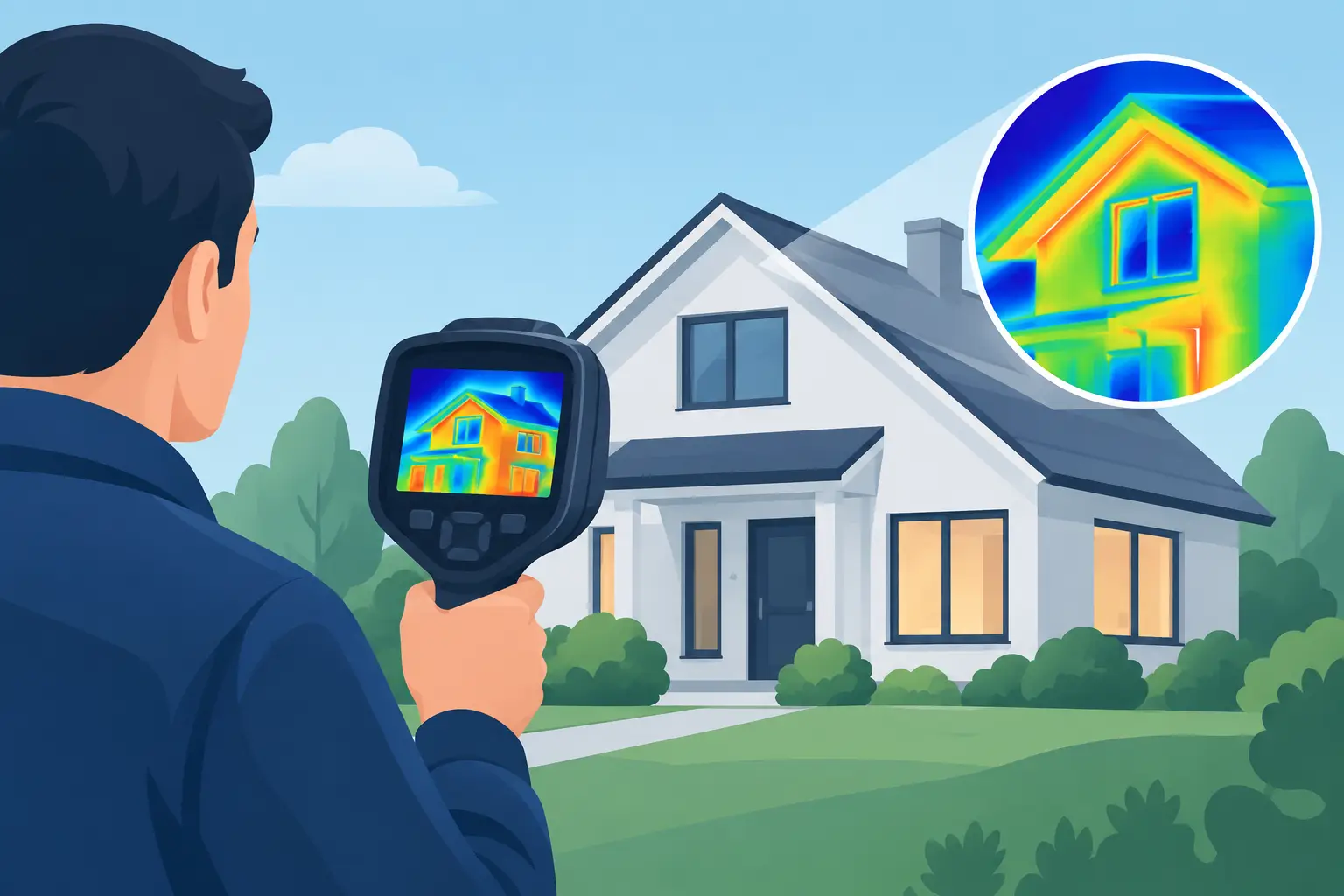

A thermal imaging inspection can reveal patterns a standard visual review cannot see: a cold area behind a finished wall, unusual heat at an electrical component, or moisture affecting materials before staining becomes obvious. For a home buyer, those findings can turn a vague concern into a focused question before conditions are removed and closing day arrives.
Buying a home involves more than judging what is visible during a showing. Fresh paint, finished basements, stored belongings, and seasonal conditions can conceal signs of deferred maintenance. Infrared technology adds another layer of information to a thorough home inspection, helping identify areas that deserve closer evaluation while there is still time to make an educated decision.
What a Thermal Imaging Inspection Shows
Thermal imaging uses an infrared camera to display surface temperature differences. The camera does not see through walls, and it does not identify a defect by itself. Instead, it shows heat patterns that may point to conditions requiring further investigation.
For example, a cooler section of ceiling may be consistent with missing insulation, air leakage, or moisture. A warmer-than-expected electrical connection may indicate excessive resistance or an overloaded component. A temperature pattern around a plumbing fixture may suggest an active leak or moisture condition. The inspector combines the image with visual observations, moisture readings when appropriate, knowledge of building systems, and the conditions present at the home.
That distinction matters. A responsible inspection report should not treat every temperature difference as proof of a major problem. Sun exposure, occupied rooms, heating equipment, appliances, and recent weather can all affect readings. The value of infrared imaging is in finding anomalies that a trained inspector can assess in context.
Why Thermal Imaging Matters Before Closing
A buyer may have only one opportunity to inspect the property before taking ownership. Once the transaction is complete, repair costs, contractor coordination, and unexpected disruption become the new owner’s responsibility. A thermal imaging inspection helps reduce that uncertainty by looking beyond the obvious.
It can be especially useful in homes with finished basements, newly renovated areas, inaccessible cavities, or limited visual evidence of a concern. It may identify a missing insulation area in an attic wall, uneven heat loss around windows, a possible roof or plumbing moisture issue, or an electrical hot spot that warrants qualified repair.
These findings are not automatically deal-breakers. Often, they provide useful negotiation leverage, help a buyer request documentation or repairs, or allow the buyer to budget realistically for work after closing. Just as importantly, they can help prioritize safety-related concerns. An electrical anomaly or evidence of active moisture deserves timely attention, even if the rest of the home appears well maintained.
The difference between a visual-only inspection and infrared support
A visual inspection remains essential. Roof coverings, foundations, plumbing fixtures, electrical panels, heating equipment, attic conditions, doors, windows, decks, and many other components need careful hands-on and visual evaluation. Thermal imaging supports that work. It gives the inspector another way to identify areas that may not be apparent under normal lighting.
Consider a ceiling with no visible stain. If its temperature pattern differs noticeably from surrounding materials, the inspector may inspect the attic above, use a moisture meter, ask about recent weather, or recommend further evaluation. Without the infrared image, that same area may not receive additional attention because there is no visible reason to suspect it.
Common Issues Infrared Cameras May Help Identify
Infrared imaging is useful because homes are systems. Water, heat, air movement, and electricity often leave temperature signatures before their effects become clearly visible. During an inspection, an infrared camera may help identify the following types of conditions:
- Potential moisture intrusion at roofs, windows, exterior walls, plumbing fixtures, or below-grade spaces
- Insulation deficiencies, thermal bridging, or air leakage affecting comfort and energy performance
- Uneven heating or cooling distribution near ducts, registers, and building envelope components
- Elevated temperatures at electrical breakers, conductors, outlets, or connections
- Possible concealed plumbing leaks or temperature irregularities around supply and drain areas
Each finding depends on the home and the day of the inspection. A camera may not detect a leak that is dry at the time of the appointment. It may not provide meaningful insulation information if indoor and outdoor temperatures are too similar. Electrical components must also be energized and carrying an adequate load for some heat-related concerns to be visible.
This is why inspection experience matters as much as the camera. The equipment identifies a pattern. The inspector’s training and trade-level understanding help determine whether that pattern is normal, worth monitoring, or in need of repair or additional evaluation.
What Thermal Imaging Cannot Do
Home buyers deserve clear expectations. Infrared imaging is a valuable inspection tool, but it is not X-ray vision and it cannot guarantee that every hidden defect will be found.
The camera reads surface temperatures, not conditions inside a wall. It cannot confirm mold, determine the exact source of every moisture pattern, measure structural strength, or replace a specialized evaluation when one is needed. A cooler wall area, for instance, could result from insulation gaps, air leakage, moisture, or a difference in framing. The report should explain what was observed and recommend the right next step when confirmation is outside the scope of a home inspection.
Weather can also affect results. Strong sunlight may warm one exterior wall more than another. Recent rain can change surface temperatures. A vacant home with no heating system operating may offer fewer useful temperature contrasts. These limitations do not make infrared imaging less worthwhile. They simply reinforce why it should be used thoughtfully, as part of a complete inspection rather than as a stand-alone service.
How Infrared Findings Help You Make Better Decisions
The strongest inspection reports do more than list defects. They help you understand what deserves immediate attention, what may require a contractor’s opinion, and what can be planned for over time.
If a thermal image supports evidence of moisture at a finished basement wall, you may decide to request further investigation before removing inspection conditions. If it identifies heat loss around several windows, you can consider the likely cost and timing of improvements. If it shows an electrical concern, you have a clear reason to involve a qualified electrician before assuming the issue is minor.
This information also helps separate cosmetic imperfections from conditions with broader consequences. Peeling paint is visible. Moisture behind the wall where that paint is located may be the more important issue. A room that feels chilly may seem like a comfort preference until infrared observations point to missing insulation or significant air leakage.
For first-time buyers, this level of clarity can reduce the pressure to make decisions based only on appearance or reassurance from others. For experienced buyers, it provides a more complete picture of the property’s condition and helps support a practical negotiation strategy.
Thermal Imaging Included With a Complete Home Inspection
At Infrared Home Inspections, thermal imaging is included with every home inspection at no additional charge. It is used alongside a comprehensive review of the home’s major accessible systems and components, not as a quick add-on or a substitute for careful inspection work.
That approach is particularly valuable in New Brunswick homes, where heating demands, changing seasons, basement moisture, attic ventilation, and older electrical or plumbing updates can all influence a property’s condition. A diligent inspection considers the age and construction of the home, what is accessible on the day, and the practical impact of the findings on your safety, investment, and next steps.
You should also expect explanations in plain language. Technical findings matter, but so does knowing what they mean for your purchase. A same-day digital report with clear photos and observations can help you review concerns with your agent, seller, contractor, or legal representative without relying on memory after a long inspection appointment.
Questions to Ask When an Infrared Concern Is Found
When an inspector identifies an infrared anomaly, ask what other evidence supports the observation. Was moisture detected? Is the area accessible from an attic, crawl space, or utility room? Could weather, sun exposure, or current system operation affect the reading? Does the condition need immediate repair, further evaluation, or monitoring?
These questions keep the conversation focused on risk and next steps rather than assumptions. The best outcome is not necessarily a defect-free report. It is a clear understanding of the home you are considering, including where additional information or repair is warranted.
Before you waive inspection conditions or finalize a purchase, give hidden concerns the same attention you give visible ones. A careful thermal imaging inspection can provide the clarity needed to move forward with confidence, negotiate from knowledge, and protect one of the largest investments you will make.