
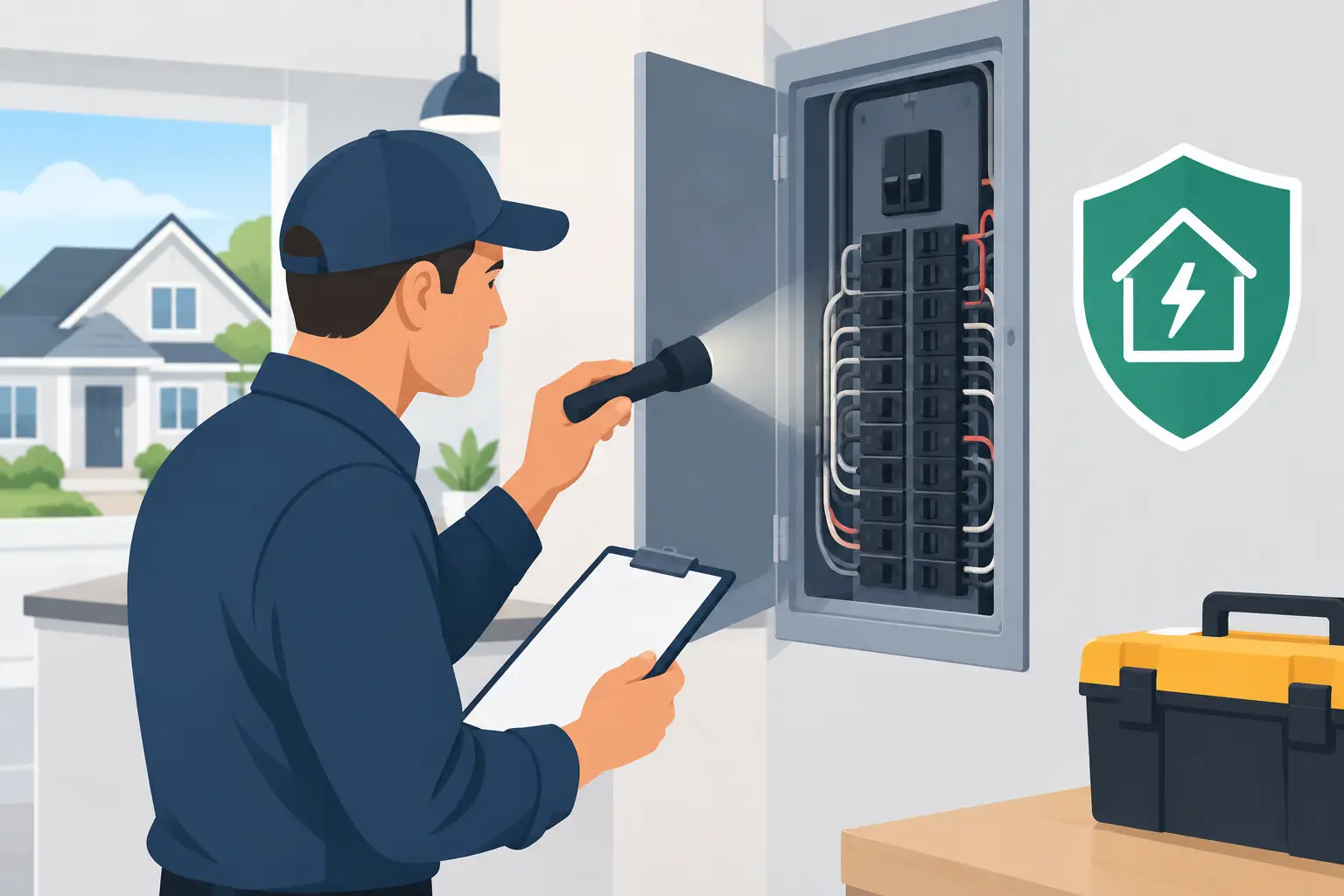

The electrical panel may be tucked into a basement corner, and the outlets may look perfectly ordinary. Yet electrical defects can be among the most consequential findings in a home purchase. An electrical safety home inspection helps identify visible conditions that may present shock, fire, reliability, or repair concerns before you take ownership.
For buyers, this is not about expecting a flawless house. It is about understanding what is present, what may need attention, and whether a qualified electrical contractor should assess or correct a concern before closing. A careful inspection gives you clearer information for negotiations, repair requests, budgeting, and peace of mind.
Why Electrical Safety Matters Before Closing
Electrical systems work quietly until something goes wrong. Loose connections can overheat inside a panel or outlet box. Aging wiring can become brittle. Improper alterations by previous owners can leave behind conditions that are not obvious during a walkthrough. A home may have enough working lights and receptacles to feel functional while still containing deficiencies that deserve further evaluation.
The age of the property matters, but it is not the whole story. Older homes may have systems that predate current safety practices, while newer homes can have rushed repairs, damaged components, or homeowner-installed additions. Renovations are especially worth reviewing. A finished basement, new bathroom, hot tub connection, garage workshop, or added heat pump can all place new demands on an electrical system.
A professional home inspection is visual and non-invasive. It does not replace a full electrical code inspection or the diagnostic work of a licensed electrician. However, it can identify reportable visible conditions and warning signs early enough to protect your investment and support an informed decision.
What an Electrical Safety Home Inspection Looks At
A thorough electrical review considers how the system is configured, whether visible components appear serviceable, and whether basic safety features are present where expected. The inspector evaluates accessible electrical components without dismantling walls, removing panel covers beyond the scope of the inspection, or performing repairs.
The Service Panel and Breakers
The service panel is the control center of the home’s electrical system. Inspectors look for accessible concerns such as missing panel cover screws, open knockouts, corrosion, signs of overheating, improper breaker labeling, double-tapped breakers where not permitted, and wiring that appears damaged or improperly installed.
Clear labeling matters more than many buyers realize. In an emergency, occupants need to know which breaker controls key areas of the home. Labels such as “lights” or “upstairs” may not provide enough clarity. A panel should also be accessible, with appropriate working clearance rather than blocked by storage, shelving, or finished construction.
Panel capacity is another issue that requires context. A smaller service may be adequate for a modest home with limited electrical loads, but it can become a concern when the home includes electric heating, a range, dryer, workshop equipment, a vehicle charger, or planned additions. An inspector can flag visible limitations, while an electrician can determine whether upgrades are necessary for your intended use.
Wiring, Connections, and Visible Defects
Where wiring is accessible in basements, attics, utility rooms, crawl spaces, and garages, an inspection may reveal unsupported cables, exposed splices, improper junction boxes, damaged insulation, or wiring that appears to have been altered without professional workmanship.
Aluminum branch-circuit wiring, knob-and-tube wiring, and other older wiring methods deserve careful attention when present. Their existence does not automatically mean the home is unsafe or that a sale should stop. The condition of the installation, past modifications, insurance requirements, and recommendations from a qualified electrician all matter. Buyers should avoid accepting broad assurances without documentation and a clear understanding of the system’s condition.
Outlets, Switches, and Safety Devices
Accessible outlets and switches are tested on a representative basis using appropriate tools. This can identify reversed polarity, open grounds, inoperative receptacles, and other visible or functional concerns. Loose outlets, cracked covers, missing cover plates, and receptacles located too close to water are also important observations.
Ground-fault circuit interrupter protection, commonly called GFCI protection, is designed to reduce shock risk in locations such as bathrooms, kitchens, garages, unfinished basements, exterior areas, and near laundry or utility sinks. A missing or non-functioning GFCI device does not always reveal the complete cause, but it is a condition that should be evaluated and corrected as appropriate.
Arc-fault circuit interrupter protection, or AFCI protection, is intended to help reduce risks associated with certain electrical arcing conditions. Requirements vary based on the age of the home, its renovations, and applicable standards. The practical point for buyers is straightforward: safety protection should be assessed in the context of the home, not assumed simply because a breaker panel looks modern.
How Thermal Imaging Can Add Useful Evidence
Thermal imaging can complement a visual electrical inspection by identifying temperature differences that may warrant closer attention. For example, an overloaded connection, loose termination, or active electrical component may produce a warmer-than-expected pattern under the right operating conditions.
That does not mean every warm area is a defect. Electrical equipment naturally generates some heat, and infrared results depend on factors such as electrical load, access, environmental conditions, and the moment the image is captured. Thermal imaging is an additional investigative tool, not an X-ray of every wire behind the walls.
At Infrared Home Inspections, complimentary thermal imaging is used as part of a more complete assessment. When a thermal anomaly is observed, it can help document why a further evaluation recommendation is being made. When no anomaly appears, it should not be read as a guarantee that concealed wiring is free of defects. Clear reporting includes both the finding and the limitation.
Electrical Findings That Should Not Be Dismissed
Some electrical concerns are primarily maintenance or upgrade items. Others can carry more immediate safety implications. Buyers should take prompt action when an inspection identifies evidence of overheating, damaged service equipment, exposed energized components, water intrusion around electrical equipment, improper wiring connections, or repeated tripping of breakers.
A breaker that trips is doing a job. Repeated tripping can indicate an overloaded circuit, a faulty appliance, a wiring issue, or another condition that needs diagnosis. Resetting it repeatedly without finding the cause is not a repair strategy.
Similarly, flickering lights are not always harmless. A single flickering bulb may be a simple bulb or fixture issue. Widespread flickering, dimming when large appliances start, buzzing from the panel, burning odors, or warm outlets call for a more urgent professional assessment. These are not items to postpone until after move-in.
Turning Findings Into a Smart Buying Decision
The most useful inspection report does more than list defects. It explains what was observed, where it was found, why it matters, and what type of follow-up is appropriate. That allows buyers and their real estate agents to distinguish between a small correction, a budgeting item, and a concern requiring prompt electrician review.
If electrical deficiencies are identified, ask for estimates from a qualified electrician when timing permits. This helps turn a vague concern into practical information. You may decide to request repairs, negotiate a price adjustment, plan work after closing, or reconsider the purchase if the scope is larger than expected.
Keep the home’s future use in mind. A family planning an electric vehicle charger, a finished basement office, additional heating equipment, or a serious hobby workshop may need more electrical capacity than the current occupants. The right question is not only, “Does it work today?” It is also, “Will this system safely support how we plan to live here?”
What a Home Inspection Cannot Confirm
No visual inspection can see every conductor inside walls or predict every future failure. Furniture, stored belongings, locked rooms, inaccessible attics, snow-covered exterior areas, and inactive systems can limit what is observed. Inspectors also do not redesign electrical systems, certify code compliance, or perform invasive testing.
Those limits are not a reason to skip the inspection. They are a reason to use the report correctly. A diligent electrical safety review identifies accessible concerns and directs you toward qualified further evaluation when conditions warrant it. That is valuable protection before a high-stakes purchase.
Before removing conditions or finalizing your purchase, make time to review the electrical findings with your inspector and ask direct questions. A clear explanation of what was found, what remains uncertain, and what should happen next can help you move forward with confidence rather than assumptions.