
A ceiling can look freshly painted, a basement wall can appear dry, and an electrical panel can seem orderly at first glance. Yet the conditions that matter most during a home purchase are not always visible on the surface. Infrared versus visual inspections is not a choice between two competing services. A careful home inspection uses both methods to give buyers a clearer picture of the property they are considering.
For buyers in Saint John, the Kennebecasis Valley, Fredericton, and surrounding New Brunswick communities, this distinction can have real financial consequences. A visual inspection identifies many important concerns. Thermal imaging can add another layer of information by helping reveal temperature differences that may point to moisture, missing insulation, air leakage, or electrical concerns. Together, they support safer decisions, stronger negotiations, and fewer unwelcome surprises after closing.
What a Visual Home Inspection Can Tell You
A visual inspection is the foundation of a professional home inspection. The inspector evaluates readily accessible areas and major systems, looking for material defects, safety issues, deterioration, improper installation, and signs that a component may need repair, further evaluation, or replacement.
This includes the exterior, roof, foundation, attic, crawl space, plumbing fixtures, electrical system, heating and cooling equipment, kitchens, bathrooms, doors, windows, decks, fireplaces, and more. An experienced inspector does not simply look for obvious damage. They evaluate how components appear to function, how they relate to one another, and whether visible conditions suggest a larger concern.
For example, a visual inspection may identify cracked foundation material, damaged roof shingles, improper deck connections, a missing GFCI receptacle, corrosion at a plumbing connection, or an aging heating system. These findings are valuable because they directly affect safety, maintenance planning, and the cost of ownership.
Visual inspection also provides essential context for thermal findings. If an infrared image shows an unusually cool area beneath a window, the inspector can compare that pattern with visible staining, damaged caulking, grading conditions outside, or a known plumbing line inside the wall. The best conclusions come from evidence, not from a single image.
Infrared Versus Visual Inspections: The Key Difference
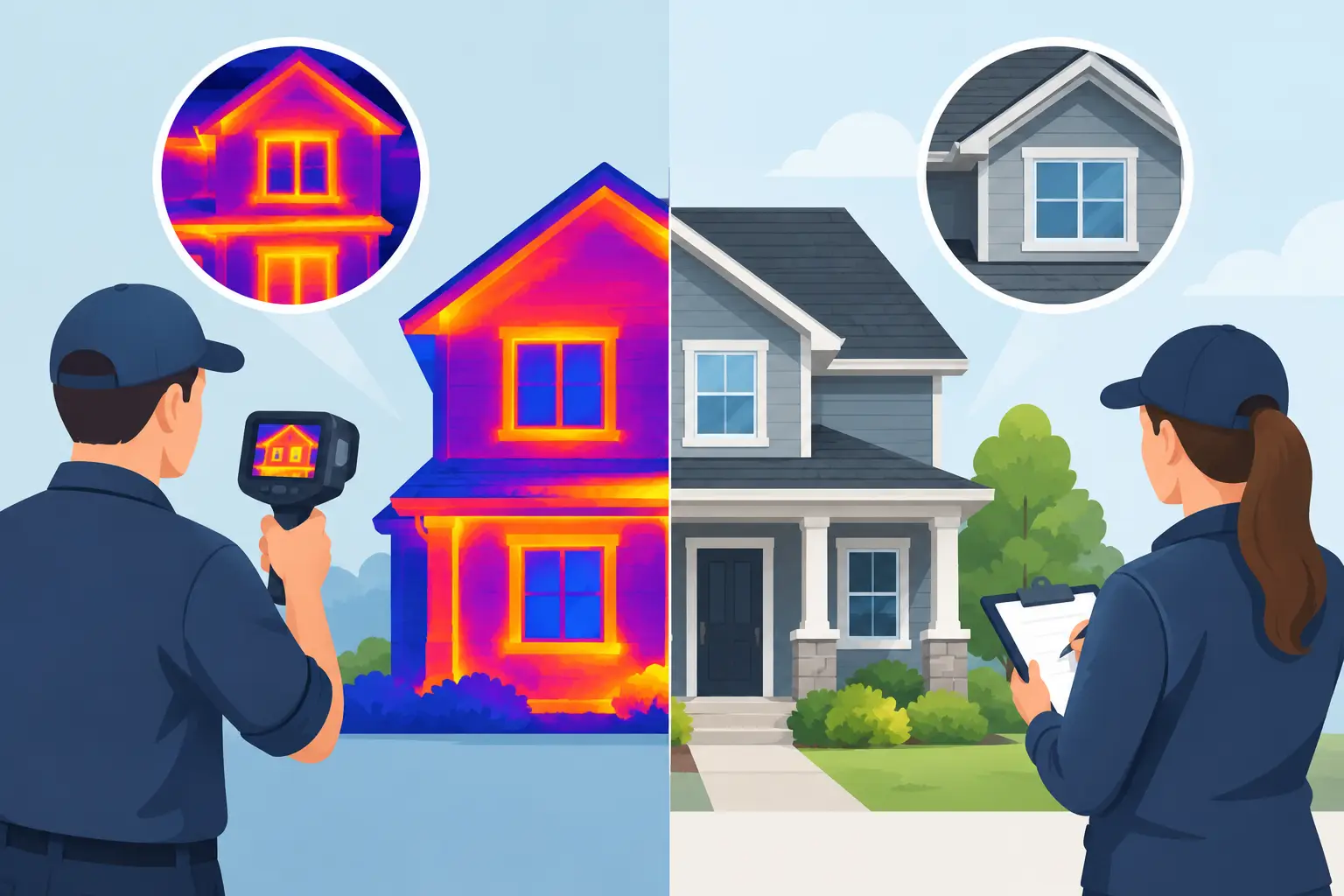
The central difference is simple: visual inspection evaluates what can be seen with the naked eye, while infrared imaging detects surface temperature variations. A thermal camera does not see through walls, and it does not diagnose a defect by itself. It translates infrared energy into an image that shows warmer and cooler areas in different colors or shades.
Those temperature patterns can help an inspector identify areas that deserve closer attention. A cool spot on a ceiling may be consistent with moisture. A warm electrical connection may suggest overheating. Uneven temperatures in an exterior wall may indicate missing, compressed, or poorly installed insulation. In each case, the image is an important clue, not a final verdict.
That distinction protects buyers from two common mistakes. The first is assuming that a home that looks good has no hidden concerns. The second is assuming every unusual thermal pattern means a major defect. Professional interpretation matters because temperature differences can also be caused by sunlight, HVAC operation, construction materials, furniture placement, recent weather, or normal differences between conditioned and unconditioned spaces.
What Thermal Imaging May Help Reveal
When conditions are favorable, infrared technology can help identify patterns associated with concerns that may not yet be visible. During a home inspection, thermal imaging may assist with evaluating the following areas:
- Possible moisture intrusion around roofs, windows, exterior doors, plumbing fixtures, and ceilings
- Insulation gaps and air leakage in attics, exterior walls, and around penetrations
- Unusual heat patterns at electrical panels, breakers, receptacles, switches, and connections
- Heating and cooling distribution issues, including vents that are not performing as expected
- Cold areas that may contribute to drafts, condensation, comfort concerns, or higher energy use
A thermal image is especially useful when it confirms or challenges what the inspector sees visually. If a bathroom ceiling has a faint stain, a moisture pattern in the same location may support a recommendation for further investigation. If an electrical component appears normal visually but shows unusual heat under operating conditions, that finding may warrant prompt evaluation by a qualified electrician.
For buyers, the benefit is not a collection of colorful images. The benefit is clearer information about where additional questions, repairs, or specialist assessments may be needed before the transaction moves forward.
Why Visual-Only Inspections Can Miss Early Clues
Many property defects develop gradually. A small plumbing leak behind a vanity may dampen materials long before visible staining appears. An insulation gap may make a room uncomfortable for years without leaving an obvious mark. A loose electrical connection may generate excess heat before it causes a breaker to trip or visible damage to occur.
A visual-only inspection may still identify evidence around these conditions, such as odors, staining, corrosion, damaged finishes, or poor installation practices. But thermal imaging can sometimes reveal a temperature anomaly before the visible evidence becomes clear.
That added perspective is particularly helpful in homes that have been recently painted, staged for sale, or renovated. Fresh finishes are not automatically a concern, but they can make it harder to judge what may have existed before. Thermal imaging gives the inspector another non-invasive tool to evaluate suspicious areas without removing walls or disrupting the property.
Why Infrared Imaging Is Not a Replacement for Inspection Experience
Thermal cameras are valuable tools, but they are not magic. They cannot see through every surface, measure moisture content directly, confirm the source of a leak, or predict when a system will fail. A thermal scan can be limited by weather, indoor temperature differences, insulation type, surface coverings, accessibility, and whether the heating or cooling system is operating.
This is why infrared technology should be used by an inspector who understands building systems and knows how to investigate what the camera reveals. A pattern must be considered alongside visible conditions, moisture indicators, system operation, and the home’s construction. In some cases, the appropriate recommendation is further evaluation by a licensed contractor, electrician, plumber, roofer, or HVAC professional.
At Infrared Home Inspections, thermal imaging is included as part of a comprehensive inspection because the goal is not to create unnecessary alarm. The goal is to identify concerns honestly, explain what they may mean, and help clients decide what should happen next.
How Both Methods Protect Your Purchase
The strongest inspection approach is layered. Visual inspection establishes the condition of accessible components and identifies observable defects. Infrared imaging can help focus attention on hidden or developing concerns that deserve a closer look. The inspector then documents findings in clear terms so buyers can understand the practical impact.
This can improve your position in several ways. You may have better information for repair negotiations, a more realistic budget for upcoming maintenance, and clearer priorities for specialist follow-up. Just as importantly, you can move forward knowing the property was evaluated with more than a quick walkthrough and a checklist.
For first-time buyers, that clarity can reduce the pressure of trying to interpret technical issues alone. For experienced buyers and real estate professionals, it provides a more complete basis for evaluating risk in a fast-moving transaction.
Questions to Ask About Thermal Imaging
Before scheduling an inspection, ask whether infrared imaging is included, whether the inspector is trained to interpret thermal patterns, and how findings are documented in the report. Ask whether the inspector will explain findings with you after the inspection, rather than leaving you to decode technical language on your own.
Also ask about limitations. A trustworthy inspector should be clear that thermal imaging is a supplemental tool and that no inspection can identify every concealed condition. Honest limits build confidence because they show the inspection is based on sound judgment, not exaggerated promises.
A home purchase deserves more than a surface-level look. When visual expertise and thermal imaging work together, you gain a clearer view of the home, better questions to ask, and greater confidence in the decision ahead.