
A ceiling stain that looks old may still be active. A wall that looks perfectly sound may be damp behind the paint. That is why infrared scans versus moisture meters is not an either-or question for a careful home inspection. Each tool answers a different question, and using them properly can help a buyer understand whether a concern is cosmetic, active, or worth investigating further before closing.
For homebuyers, the practical issue is simple: hidden moisture can lead to mold-like conditions, damaged insulation, decayed framing, roof leaks, plumbing repairs, and difficult negotiations after possession. A trained inspector uses observations, experience, thermal imaging, and moisture testing together to provide clarity where a visual-only inspection may leave uncertainty.
Infrared Scans Versus Moisture Meters: What Each Tool Detects
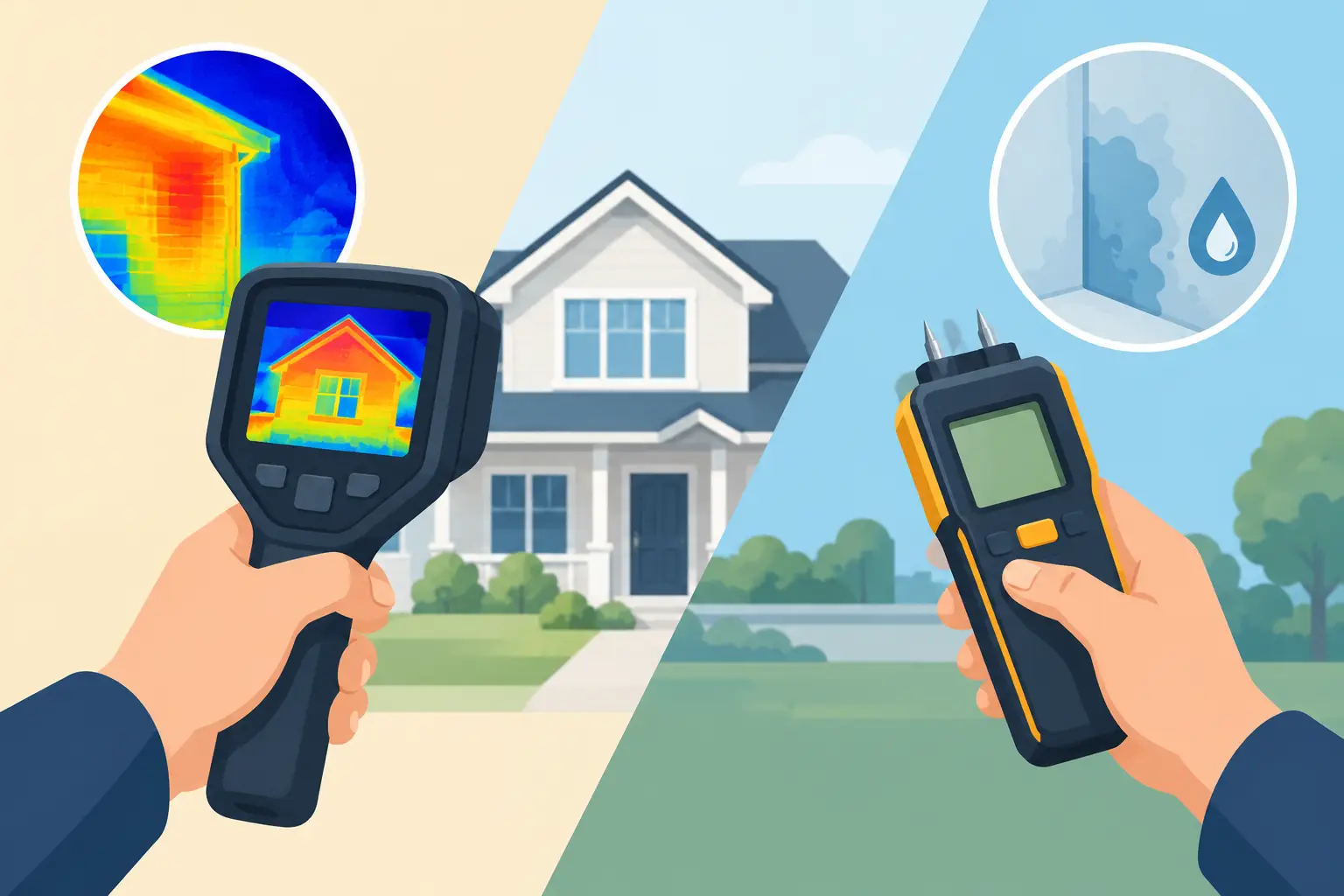
An infrared camera, often called a thermal camera, displays differences in surface temperature. It does not see through walls, and it does not directly detect water. Instead, it identifies temperature patterns that may point to conditions requiring closer attention.
For example, moisture evaporation can cool an area of drywall or ceiling material. On a thermal image, that cooler area may stand out from the surrounding surface. A similar pattern might also be caused by missing insulation, air leakage, a cold exterior wall, or an HVAC-related temperature difference. Thermal imaging is highly useful because it helps an inspector quickly identify areas that may otherwise look normal.
A moisture meter serves a different role. It measures the moisture content or moisture-related electrical properties of a material. Pin-style meters use small probes to test a targeted location. Pinless meters scan beneath the surface without puncturing it, although their readings can be affected by material density, metal, fasteners, and the depth of the material being tested.
In plain terms, an infrared scan helps locate a suspicious pattern. A moisture meter helps determine whether elevated moisture is present at that specific area. Neither tool replaces professional judgment, and neither should be interpreted without considering the building materials, weather, heating conditions, and visible evidence.
Why Thermal Imaging Is Valuable During a Home Inspection
Thermal imaging can cover large areas efficiently. During a home inspection, this makes it especially helpful for scanning ceilings below bathrooms, plumbing fixtures, exterior walls, attic spaces, windows, electrical panels, and heating and cooling components.
A thermal camera may reveal a cool area below a second-floor bathroom before a stain has formed. It may show irregular insulation coverage in an attic or exterior wall. It can also help identify a potentially overheated electrical connection, which is a different issue from moisture but still a meaningful safety concern.
The benefit for a buyer is early awareness. A thermal anomaly does not automatically mean a major defect, but it gives the inspector a reason to slow down, inspect the area more closely, and recommend further evaluation when the evidence supports it. That can be valuable negotiation information before you become responsible for the property.
Thermal imaging also has limits. A home needs suitable temperature conditions for certain scans to be meaningful. Strong sun exposure, recent rain, furniture against walls, rugs, and active HVAC systems can all influence surface temperatures. An experienced inspector understands those limitations and avoids presenting a colorful thermal image as proof of a problem when it is only a clue.
A Cold Spot Is Not Always a Leak
This distinction matters. A cool area on a ceiling could be related to moisture, but it could also be an uninsulated section above the ceiling or cold air moving through a gap. Conversely, a plumbing leak may not show a clear thermal signature if the materials have reached a similar temperature or if the leak is very small.
A reliable inspection report should explain what was observed, where it was found, and why additional review or monitoring may be appropriate. It should not make claims that the available evidence cannot support.
When a Moisture Meter Provides Better Confirmation
When an infrared scan identifies an unusual pattern, a moisture meter can provide a more direct indication of whether the material has elevated moisture. This is particularly useful around shower surrounds, toilets, sinks, skylights, roof penetrations, basement walls, window openings, and visible ceiling stains.
Consider a bathroom ceiling beneath a tub or shower. A thermal camera may show a cooler section near the plumbing fixture. Targeted meter readings can help distinguish between a temperature difference caused by air movement and a material with moisture-related concerns. If readings are elevated and there are visible signs such as staining, softened drywall, deteriorated caulking, or a loose toilet, the concern becomes more credible.
Moisture meters also require careful interpretation. Pinless readings can be affected by foil-backed insulation, metal studs, wiring, and dense construction materials. Pin meters are more precise at the probe location, but they are intrusive and may not be appropriate for every finished surface. A qualified inspector selects the least invasive method that is reasonable for the situation and explains the limitations of the testing.
A moisture meter reading is not the same as a laboratory test for mold, nor does it identify the source of moisture by itself. It is one piece of evidence that helps guide next steps.
The Strongest Approach Uses Both Tools
The best inspection process does not treat technology as a substitute for a thorough visual assessment. It starts with visible conditions: stains, cracks, failed sealant, drainage concerns, aging roof materials, plumbing leaks, damaged flashing, and ventilation issues. Thermal imaging and moisture testing then add another layer of information where conditions warrant it.
A typical sequence might begin with a visual scan of a stained ceiling. If the area appears suspicious, thermal imaging can show whether its temperature differs from surrounding materials. Moisture readings can then be taken at the suspected area and compared with nearby dry locations. The inspector also considers what is directly above the area, such as a bathroom, roof valley, exterior wall, or plumbing line.
This method is more reliable than relying on either tool alone. It reduces the risk of overlooking a hidden concern while also reducing the risk of overstating an innocent temperature variation as a confirmed leak.
For buyers, this distinction protects both your budget and your decision-making. A report that identifies a possible concern without exaggeration gives you a sound basis to ask questions, request repair documentation, seek a qualified contractor’s opinion, or negotiate appropriately.
What Homebuyers Should Expect From the Findings
Not every moisture-related finding requires the same response. A minor elevated reading near a window may call for maintenance, improved exterior sealing, or monitoring. Evidence of active water intrusion at a roof, plumbing fixture, shower enclosure, or foundation wall may require prompt repair and further assessment of concealed damage.
Your inspector should help you understand the practical significance of the finding. Is the condition visible and active? Is there likely damage to adjacent materials? Does it affect safety, indoor conditions, or the home’s ability to shed water? Is further evaluation needed before the inspection contingency period ends?
At Infrared Home Inspections, complimentary thermal imaging is included to help identify conditions that may not be obvious during a standard visual review. When a thermal pattern raises concern, the goal is not to create alarm. It is to provide a clearer, more complete assessment so buyers can make educated decisions with their real estate agent and the appropriate specialists.
Do Not Let One Image Make the Decision for You
A thermal image can be compelling, especially when it shows a bright or dark shape hidden behind a finished surface. But home buying decisions should rest on the full picture: the condition of the home, the location of the concern, meter readings where appropriate, visible evidence, maintenance history, and recommendations for repair or further evaluation.
If an inspection identifies a possible moisture concern, ask what the evidence shows, what remains uncertain, and what should happen next. Clear answers before closing are far less expensive than discovering a concealed leak after you own the home.