
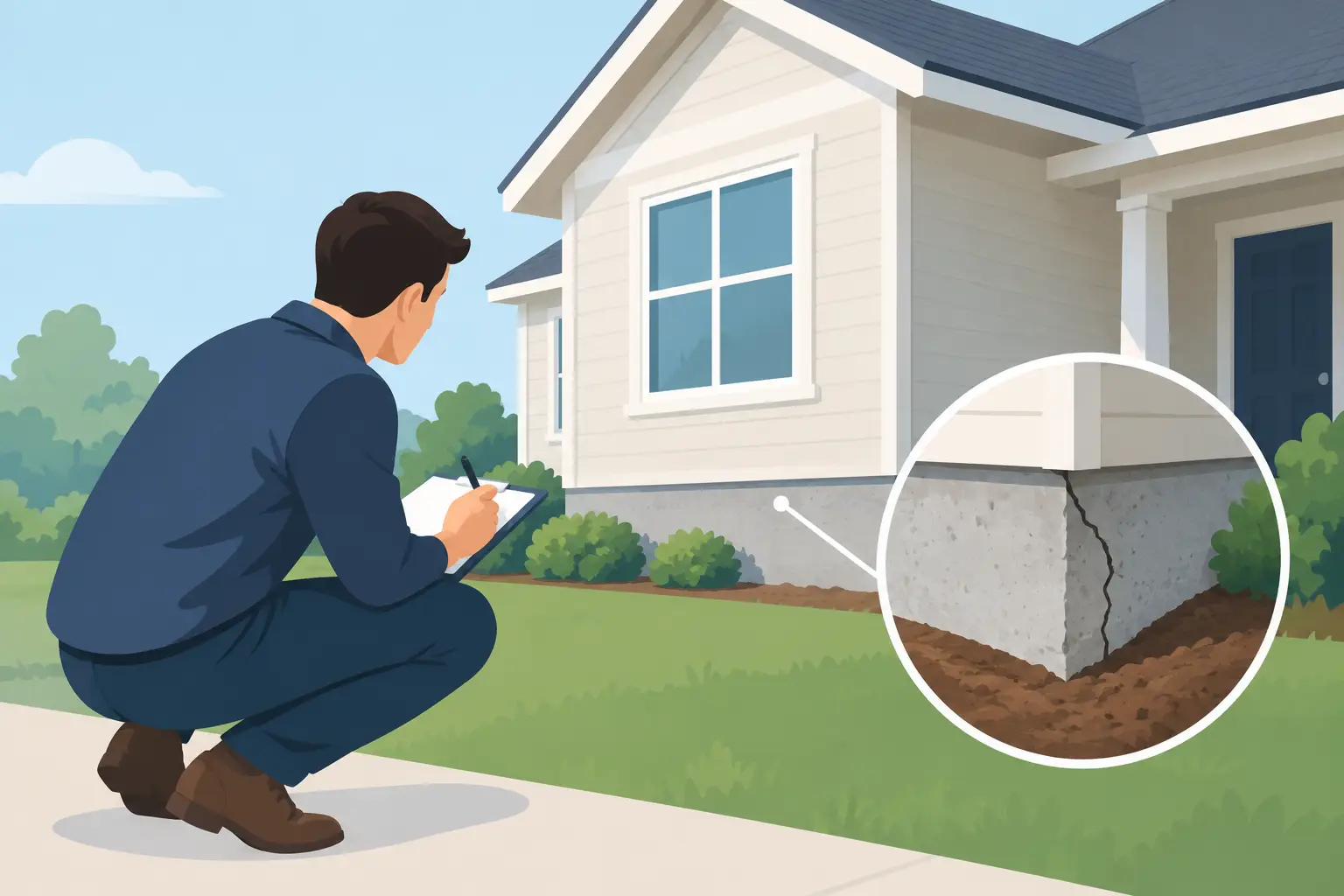

A hairline crack in a basement wall may be ordinary concrete shrinkage. A crack that widens, steps through block joints, or appears alongside sticking doors is a different conversation. Knowing how to spot foundation settlement helps buyers slow down, ask better questions, and avoid treating a potentially expensive structural concern as a cosmetic issue.
Foundation movement is not always a reason to walk away from a home. Many houses settle to some degree over time, particularly in areas with changing soil moisture, freeze-thaw cycles, older construction, or additions built in different eras. The key is distinguishing normal aging from movement that appears active, uneven, or connected to water and drainage problems.
What Foundation Settlement Actually Means
Foundation settlement occurs when the soil beneath part of a home shifts, compresses, washes away, or no longer supports the structure evenly. One section of the foundation can move more than another, placing stress on walls, floors, roof framing, doors, windows, and finishes.
Settlement is often associated with poor drainage, downspouts that discharge beside the house, grading that directs water toward the foundation, plumbing leaks, expansive or unstable soil, or inadequate footing support. In some homes, the movement happened years ago and was professionally repaired. In others, the visible evidence may be recent or still progressing.
That distinction matters. A properly documented repair with no current signs of movement may be manageable. Fresh cracking, ongoing water entry, or signs that the structure is out of level deserve further evaluation before a buyer removes inspection conditions or finalizes a purchase.
How to Spot Foundation Settlement During a Walk-Through
A buyer’s walk-through cannot replace a full inspection, but it can reveal conditions worth closer attention. Look at the home as a connected system. Foundation clues outside often match what is happening in the basement, crawl space, or upper floors.
Look for cracks with a pattern, not just a presence
Concrete and masonry can crack for several reasons. Fine, vertical hairline cracks are common and may result from curing or minor shrinkage. Wider cracks, cracks that are offset from one side to the other, and cracks that change direction are more concerning.
Pay particular attention to diagonal cracks extending from the corners of doors and windows, stair-step cracks along brick or block mortar joints, and horizontal cracks in foundation walls. A horizontal basement-wall crack can indicate pressure from surrounding soil rather than settlement alone, but it is still a condition that requires professional attention.
Inside the house, inspect drywall and plaster around windows, doors, ceilings, and wall corners. One small repaired crack is not definitive. Multiple cracks in a similar direction, especially when paired with other signs, tell a more useful story.
Test doors and windows without forcing them
Doors that rub, swing open on their own, will not latch, or show uneven gaps around the frame can indicate that framing has shifted. Windows that are difficult to open may raise the same question. However, humidity, seasonal expansion, worn hardware, paint buildup, and ordinary aging can also cause these issues.
The concern increases when several doors and windows have similar alignment problems in the same area of the home. A single sticky bedroom door is usually not enough to diagnose settlement. Several sticking doors, sloping floors, and wall cracks are a pattern worth investigating.
Notice floor slope and uneven transitions
Walk through the home without rushing. Do floors feel noticeably sloped, soft, or uneven? Does a marble or small ball roll consistently in one direction? Are there gaps between baseboards and flooring, or between trim and walls?
Older homes can have some floor irregularity without a serious structural defect. The practical question is whether the slope appears stable and age-related or whether it is associated with visible movement, damaged framing, moisture, or recent patching. An inspection can document observable conditions, but a structural engineer may be needed when movement is significant or the cause is unclear.
Check the exterior grade and water control
Water is one of the most important parts of the foundation conversation. Review the area around the home after looking at the walls. Soil should generally slope away from the foundation, gutters should be present and functional, and downspouts should discharge away from the house.
Watch for low areas beside the foundation, heavy vegetation trapping moisture against siding, eroded soil, short downspouts, or paved surfaces that direct runoff toward the building. In New Brunswick homes, snowmelt and repeated freeze-thaw cycles can make poor drainage especially costly over time.
A damp basement does not automatically mean settlement, and settlement does not always cause water intrusion. Yet the two conditions often overlap because water can soften, erode, or alter the soil supporting the foundation.
Signs That Deserve Prompt Follow-Up
Some findings should move beyond a general conversation with the seller and into a request for additional documentation or specialist review. These include:
- Cracks wider than a hairline, especially if they are diagonal, horizontal, offset, or visibly repaired more than once.
- Bowed, leaning, or displaced foundation walls.
- Noticeable floor slope combined with cracks, sticking doors, or gaps at trim and finishes.
- Water entry, efflorescence, deteriorated masonry, or evidence that soil is washing away near the foundation.
- Recent cosmetic repairs that conceal cracks, such as freshly patched drywall or newly painted foundation areas without a clear explanation.
- Previous structural work, including wall anchors, carbon-fiber reinforcement, piers, or major crack repairs, without invoices, permits, engineering details, or warranties.
These signs do not establish the severity of a defect on their own. They do establish that the home deserves a careful, informed review before you accept the risk.
Ask the Right Questions About Past Repairs
Sellers are often aware of prior foundation work, and documented repairs are not automatically negative. In fact, records can be reassuring when they show that the issue was properly diagnosed, repaired by a qualified contractor, and monitored afterward.
Ask when the cracking or movement was first noticed, whether water was involved, what repairs were completed, and whether an engineer provided recommendations. Request invoices, permits where applicable, transferable warranties, and photographs taken before repairs were covered. Also ask whether drainage improvements were completed at the same time. Repairing a crack without correcting the water source may not address the underlying cause.
If the seller cannot provide records, that does not prove the worst. It does mean the buyer should be more cautious about relying on a verbal explanation or a freshly finished basement wall.
What a Home Inspection Can and Cannot Tell You
A thorough home inspection evaluates accessible foundation areas, basement or crawl-space conditions, visible cracking, drainage concerns, moisture indicators, structural components, and related interior symptoms. The goal is to provide clear observations and practical recommendations so buyers can make educated decisions.
At Infrared Home Inspections, complimentary thermal imaging can add useful context by identifying temperature differences that may be consistent with moisture intrusion or insulation irregularities in accessible areas. Thermal imaging is not an X-ray for concrete and does not confirm settlement or replace engineering analysis. Used alongside visual inspection and moisture assessment, however, it can help identify hidden conditions that deserve closer attention.
A home inspector does not typically calculate load capacity, certify structural design, or predict future movement. When visible signs suggest significant settlement, wall displacement, or structural instability, the appropriate next step is often evaluation by a qualified structural engineer. That added cost can feel inconvenient during a fast-moving purchase, but it can provide the clarity needed to negotiate repairs, adjust the purchase terms, or proceed with confidence.
Keep the Finding in Perspective
Foundation concerns exist on a spectrum. A stable, repaired crack in an older home may be a maintenance item. A home with poor grading may need drainage improvements before the next wet season. A bowed wall, active cracking, or widespread evidence of uneven movement may involve substantial repair costs and should not be treated as a routine punch-list item.
The best decision depends on the home’s age, construction type, location, visible condition, repair history, and the opinion of the appropriate specialist. Avoid making a high-stakes decision based on one crack or one reassuring comment. Look for patterns, ask for evidence, and give serious findings the time they deserve.
A careful inspection cannot remove every uncertainty from a home purchase, but it can replace guesswork with clear next steps. When the foundation raises questions, getting answers before closing is one of the most practical ways to protect your investment and your peace of mind.