
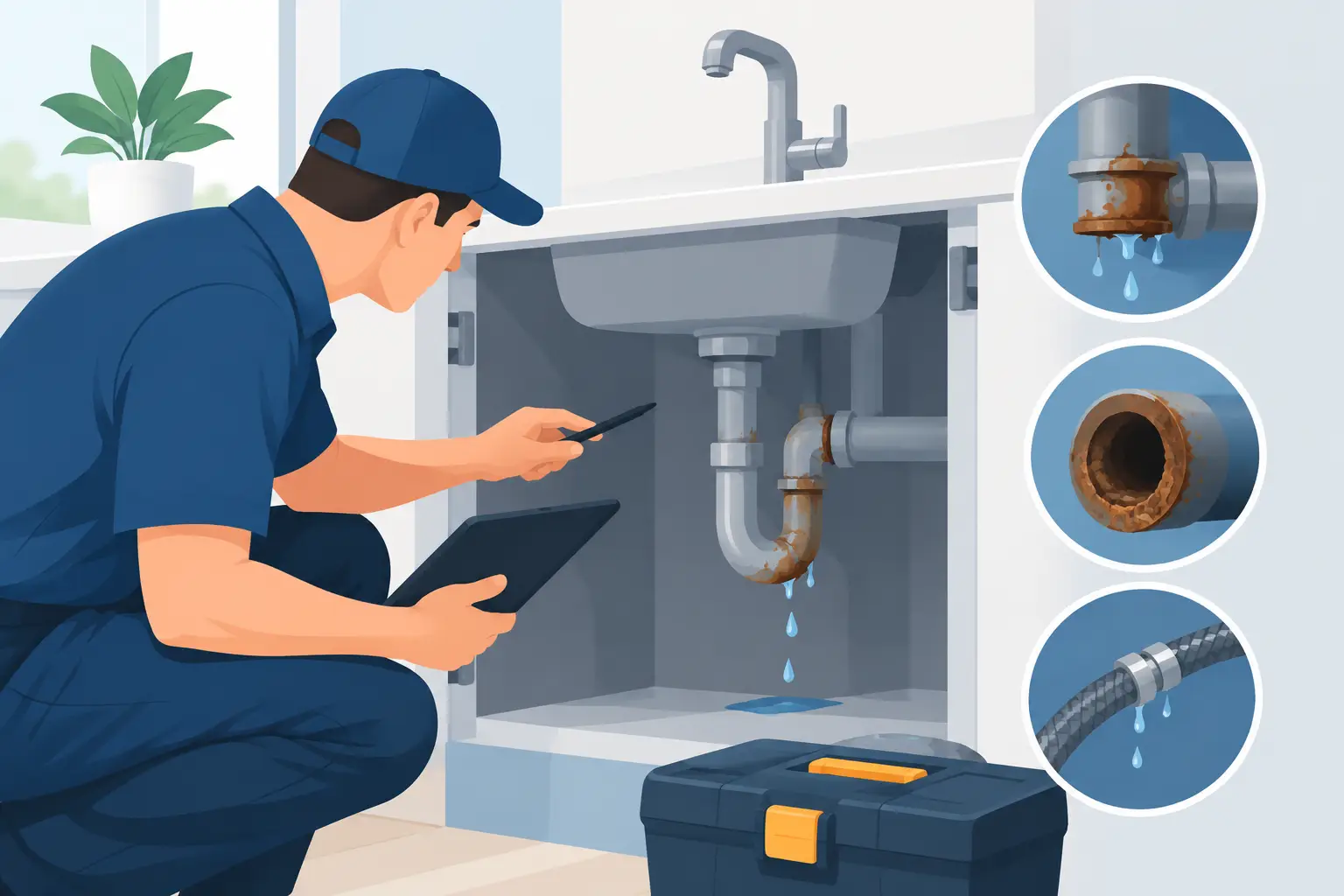

A bathroom can look freshly updated while a slow leak is staining the ceiling below it. A kitchen faucet can run normally while old drain piping is nearing the end of its service life. That is why plumbing problems found during inspection deserve careful attention before you remove conditions or finalize a purchase. They can affect daily comfort, water damage risk, safety, insurance considerations, and the true cost of owning the home.
For buyers, the goal is not to find a house with no imperfections. Most homes have maintenance needs. The goal is to understand what is present, what may need action soon, and whether the condition changes the terms or timing of your purchase.
Common Plumbing Problems Found During Inspection
A residential inspection evaluates visible, accessible plumbing components and looks for signs of deficiencies. This generally includes supply piping, drain and waste piping, fixtures, water heating equipment, shutoff valves, visible leaks, and evidence of moisture damage. Inspectors do not dismantle walls or perform a full sewer scope, but a thorough inspection can identify conditions that warrant repair, further evaluation, or additional testing.
Active leaks and concealed moisture
Active leaks are among the clearest concerns an inspector may find. They can occur below sinks, around toilets, at supply valves, near water heaters, or at visible pipe joints in basements and utility rooms. Even a small drip can lead to damaged finishes, mold-friendly conditions, wood deterioration, and higher water bills over time.
More challenging are leaks that are not visible at the time of the inspection. Staining, peeling paint, swollen trim, deteriorated flooring, or previous patchwork may point to a past or ongoing moisture issue. Infrared thermal imaging, included with every Infrared Home Inspections inspection, can sometimes reveal temperature patterns consistent with moisture behind a wall, ceiling, or cabinet. It is a valuable screening tool, not a substitute for invasive testing or a plumbing repair diagnosis. Moisture patterns must be considered alongside visual evidence, meter readings when appropriate, and the conditions present that day.
Aging, damaged, or incompatible piping
Pipe material matters because every system has a different expected lifespan and set of common concerns. Older homes may contain galvanized steel supply pipes, cast-iron drain lines, aging copper, polybutylene, or mixed materials from past repairs. A home can have a working plumbing system and still carry a higher likelihood of restricted flow, corrosion, hidden leakage, or future replacement costs.
Galvanized piping can corrode internally and reduce water pressure. Cast iron can rust and deteriorate from the inside out, particularly at joints and lower sections of drain piping. Improper transitions between dissimilar materials may also be a concern if fittings, supports, or connectors are unsuitable. These findings do not automatically mean the whole system requires replacement. The extent, accessibility, visible condition, age, and performance symptoms all matter. A qualified plumber can help define the appropriate repair scope when needed.
Drainage concerns and slow fixtures
A slow sink, tub, or shower drain can be a simple blockage. It can also point to poor venting, deteriorated drain piping, an improper slope, or a more significant obstruction farther down the line. During an inspection, fixtures are operated where practical, and the inspector watches for slow drainage, backups, leaks, unusual noises, and signs that one fixture affects another.
A drain that backs up when another fixture is used deserves more attention than a single slow bathroom sink. If multiple fixtures drain poorly or the home has a history of sewer odors, backups, recurring clogs, or mature trees near a buried line, a sewer camera inspection may be a wise next step. That additional service can provide a more direct view of the buried drain line, which is beyond the scope of a standard home inspection.
Water heater defects
Water heaters often receive limited attention during a showing, yet a failed unit can cause extensive water damage and leave a household without hot water. Common concerns include corrosion at the tank or fittings, leaking temperature and pressure relief valves, missing discharge piping, improper venting on fuel-fired units, inadequate clearance, and signs that the unit is nearing the end of its typical service life.
The temperature and pressure relief valve is especially important because it is a safety component. Its discharge pipe should terminate appropriately and safely, rather than creating a scalding or water-damage hazard. An inspector may also note whether a water heater is properly secured where local conditions require it, whether combustion venting appears acceptable, and whether visible installation details call for further review.
Age alone does not prove a water heater has failed. Still, an older unit is a budgeting issue worth recognizing before closing. If the home is otherwise a strong fit, a buyer may choose to request repair, seek a credit, negotiate price, or simply plan for replacement after possession.
Missing shutoff valves and fixture installation issues
A small shutoff valve can make a large difference during an emergency. Accessible valves at toilets, sinks, appliances, and the main water supply allow water to be isolated quickly if a supply line fails. Valves that are missing, corroded, inaccessible, or inoperable can turn a manageable leak into a larger event.
Inspectors also commonly identify loose toilets, failed caulking at tubs and showers, leaking faucets, unsupported piping, improperly installed flexible connectors, and missing protective plates where pipes pass through framing. Some of these repairs are modest. Others may indicate repeated shortcuts or deferred maintenance, which is valuable context when evaluating the property as a whole.
Why Plumbing Findings Matter in New Brunswick Homes
In Saint John, the Kennebecasis Valley, Fredericton, and surrounding communities, cold weather raises the stakes for plumbing protection. Pipes in poorly insulated exterior walls, crawl spaces, garages, or unheated areas can be more vulnerable to freezing. Evidence of past freezing, such as repaired pipe sections or water staining near exterior plumbing runs, should be discussed with the seller and assessed carefully.
Older housing stock may also have systems that have been updated in stages. A renovated kitchen or bathroom may have new fixtures connected to older supply or drain lines elsewhere in the home. A detailed report helps separate cosmetic improvement from the condition of the underlying systems.
How Buyers Should Respond to Plumbing Findings
The best response depends on the severity and certainty of the finding. An active leak, unsafe water heater installation, sewage backup concern, or suspected hidden moisture issue should be addressed promptly. A minor faucet drip or aged but functional fixture may be better handled as a planned maintenance item.
When a report recommends further evaluation, obtain it before the end of your inspection contingency whenever possible. Ask a licensed plumbing professional to identify the cause, repair options, urgency, and likely cost range. For buried drainage concerns, consider a camera scope. Written estimates give buyers and their real estate professionals stronger footing when discussing repairs or credits.
Avoid treating every report item as a reason to walk away. Inspection findings are decision-making tools, not a pass-fail grade. The questions that matter are whether the issue is safe, whether it can be repaired properly, what it may cost, and whether the overall purchase still makes sense for your budget and goals.
A Clear Report Supports Better Decisions
A useful plumbing section of an inspection report should explain what was observed, identify the location, include photos where helpful, and distinguish between a condition needing prompt attention and one to monitor or budget for. Clear language matters because buyers should not have to translate vague notes while facing a major financial decision.
Infrared Home Inspections combines a careful visual review with thermal imaging to help clients identify concerns that might otherwise be missed. The findings are then easier to discuss with your agent, the seller, and qualified repair professionals. A same-day digital report also gives you the information needed to move forward without unnecessary delay.
Before your final walkthrough, keep your inspection report available and confirm that any agreed plumbing repairs were completed by qualified professionals. A few informed questions before closing can protect your investment long after the keys change hands.