
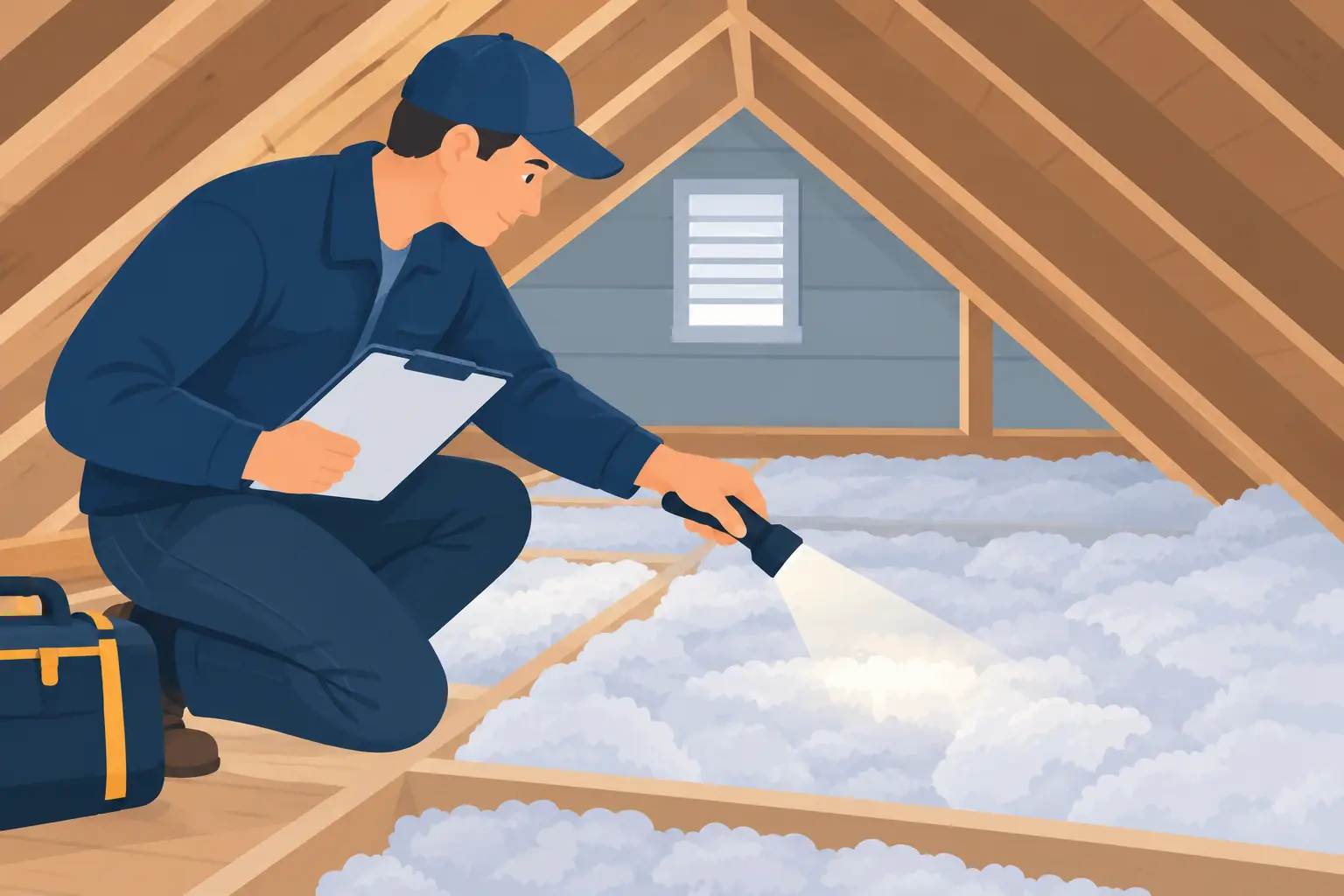

A clean-looking attic can still conceal one of the home’s most expensive problems. Insulation may hide roof leaks, electrical concerns, air leakage, mold conditions, and signs that the heating system has been working far harder than it should. This attic insulation inspection checklist helps home buyers recognize what deserves a closer look before conditions become their responsibility after closing.
Attics are not simply storage spaces above the ceiling. They are part of the home’s thermal boundary, ventilation system, and moisture-management system. In New Brunswick, where long heating seasons and changing weather put homes under real stress, a poorly performing attic can lead to uncomfortable rooms, high energy costs, ice damming, and avoidable repairs.
Start With Safe, Clear Access
Before evaluating insulation itself, look at whether the attic can be accessed safely. The hatch or pull-down stairs should be reasonably secure, and there should be enough light and stable footing to observe the accessible area. An attic that cannot be safely entered may limit what can be confirmed during an inspection.
The attic access opening also deserves attention. A poorly sealed or uninsulated hatch can allow warm indoor air to escape into the attic. That warm, moisture-laden air can contribute to condensation on roof framing during cold weather. Look for weatherstripping, insulation on the attic-side cover, and a hatch that closes without large gaps.
Stored belongings can make an attic difficult to assess. That does not automatically mean there is a defect, but it does mean concealed areas may not be visible. A careful inspection report should distinguish between conditions observed and areas that were inaccessible or obscured.
Check Insulation Coverage and Consistency
The first item on any attic insulation inspection checklist is coverage. Insulation should be reasonably continuous across the attic floor, with no broad bare areas exposing ceiling drywall or framing. Thin, uneven, compressed, or displaced insulation can reduce thermal performance significantly.
Common attic insulation types include loose-fill cellulose, loose-fill fiberglass, fiberglass batts, and spray foam. Each can perform well when correctly installed, but each has different concerns. Loose-fill material can settle over time. Fiberglass batts lose effectiveness when compressed, cut poorly around framing, or left with gaps. Spray foam requires particular attention to installation quality, roof assembly design, and ventilation strategy.
Depth matters, but it is not the whole story. A deep layer of insulation with air leaks beneath it may still allow significant heat loss and moisture movement. Likewise, a house may have insulation levels that were typical when it was built but below current efficiency expectations. The appropriate upgrade depends on the existing material, available space, roof design, and whether other attic corrections are needed first.
Look for Gaps at Edges and Penetrations
Pay close attention around the perimeter of the attic, plumbing stacks, wiring openings, duct penetrations, chimneys, and recessed lighting. These areas are frequent sources of air leakage. Insulation may be present nearby but fail to stop warm air from escaping through openings in the ceiling plane.
In colder climates, air leaks can carry indoor humidity into the attic. When that moisture contacts cold roof sheathing, it may condense or freeze. The resulting staining, frost, mold-like growth, and wood deterioration can be mistaken for a roof leak when the root cause is actually insufficient air sealing.
Inspect for Moisture, Staining, and Mold Conditions
A dry attic is one of the strongest signs that the roof, ventilation, insulation, and air barrier are working together. Look at the underside of the roof sheathing, rafters or trusses, and areas around roof penetrations for dark staining, water marks, damp insulation, rusted fasteners, or visible fungal growth.
Not every stain means there is an active leak. Old staining may reflect a repaired roof issue, past ice damming, or a previous condensation problem. What matters is whether the material appears dry, whether the issue is widespread, and whether there are signs of ongoing deterioration. A qualified inspector can help separate a cosmetic mark from a pattern that needs repair or further evaluation.
Pay special attention near bathroom exhaust ducts. These ducts should discharge to the exterior, not into the attic. An improperly terminated bath fan can release a steady supply of warm, humid air into the space, causing localized moisture damage and reducing indoor air quality.
Thermal imaging can provide valuable supporting information when conditions are suitable. Infrared does not see through walls or insulation, and it does not replace visual inspection. It can, however, help identify temperature patterns associated with missing insulation, air leakage, or moisture concerns that warrant closer investigation. Infrared Home Inspections includes thermal imaging as part of its inspection process because hidden conditions should not be overlooked simply because they are not obvious from the access hatch.
Confirm Ventilation Is Present and Unblocked
Most vented attics require a balanced path for outside air to enter low at the roof edge and exit higher on the roof. Soffit vents, roof vents, ridge vents, gable vents, and baffles may all be part of that system, depending on the home’s design.
Insulation should not block soffit vents. Baffles or vent chutes are commonly used to maintain an open air channel from the soffit into the attic while preventing loose-fill insulation from spilling into the eaves. When those pathways are blocked, the attic may retain heat and moisture, increasing the risk of condensation and shortening roof-covering life.
Ventilation is not a cure-all. Adding more vents will not solve moisture caused by major air leaks, an unvented bathroom fan, or a roof leak. The correct approach depends on the full attic assembly. A good inspection identifies visible concerns and explains where further assessment by a qualified contractor may be appropriate.
Watch for Electrical and Fire Safety Concerns
Attics often contain junction boxes, wiring, recessed lights, exhaust fan housings, and chimney or vent penetrations. These components need safe clearances and proper installation.
Open electrical junction boxes, unsupported wiring, damaged cable insulation, or amateur alterations should be documented for repair by a qualified electrician. Insulation should not cover fixtures that are not rated for insulation contact. Older recessed lights, in particular, can create heat concerns when buried under insulation.
Clearance around chimneys and certain vent pipes is equally important. Combustible insulation must be kept away from components that become hot, following the appliance and vent manufacturer’s requirements. Do not move insulation around a chimney or electrical component without understanding what is beneath it. What looks like a simple efficiency improvement can create a safety issue if done incorrectly.
Examine Ducts, Pipes, and Mechanical Components
If ducts run through the attic, look for disconnected sections, damaged insulation, loose tape, crushed flex duct, and uninsulated metal ducts. Duct leaks in an unconditioned attic waste energy and can make upper rooms difficult to heat or cool. In winter, warm air leaking from ducts can also add heat and moisture to the attic.
Plumbing pipes should be protected against freezing where needed. Insulation helps, but pipes located near cold exterior edges or exposed to air leakage may remain vulnerable. Evidence of past repairs, staining below pipes, or improvised heat cable installations should be evaluated carefully.
An attic may also contain equipment such as air handlers or ventilation units. These installations require service access, proper drainage where applicable, and correctly routed exhaust or condensate components. Limited access can make a complete evaluation impossible, which should be clearly stated rather than assumed away.
Know Which Findings Can Affect Your Purchase
Some attic findings are routine maintenance items. Adding insulation, air-sealing an attic hatch, or correcting minor displaced material may be practical improvements after closing. Other conditions deserve more urgency: active roof leakage, widespread sheathing damage, visible mold-like growth, improper exhaust termination, unsafe electrical work, or inadequate clearance around heat-producing components.
For buyers, the value of an attic finding is not limited to the immediate repair cost. It can reveal how the home has been maintained and whether related systems need closer review. Moisture staining may lead to questions about the roof. Missing soffit baffles may lead to questions about ventilation and ice dams. A disconnected bath fan duct may signal that other renovation work was completed without proper attention to building performance.
A thorough attic review gives you clear information to discuss with your real estate professional, request from the seller, or use when planning ownership costs. The goal is not to make every attic look new. It is to understand the condition you are buying and avoid being surprised by hidden repair work after the keys are in your hand.