
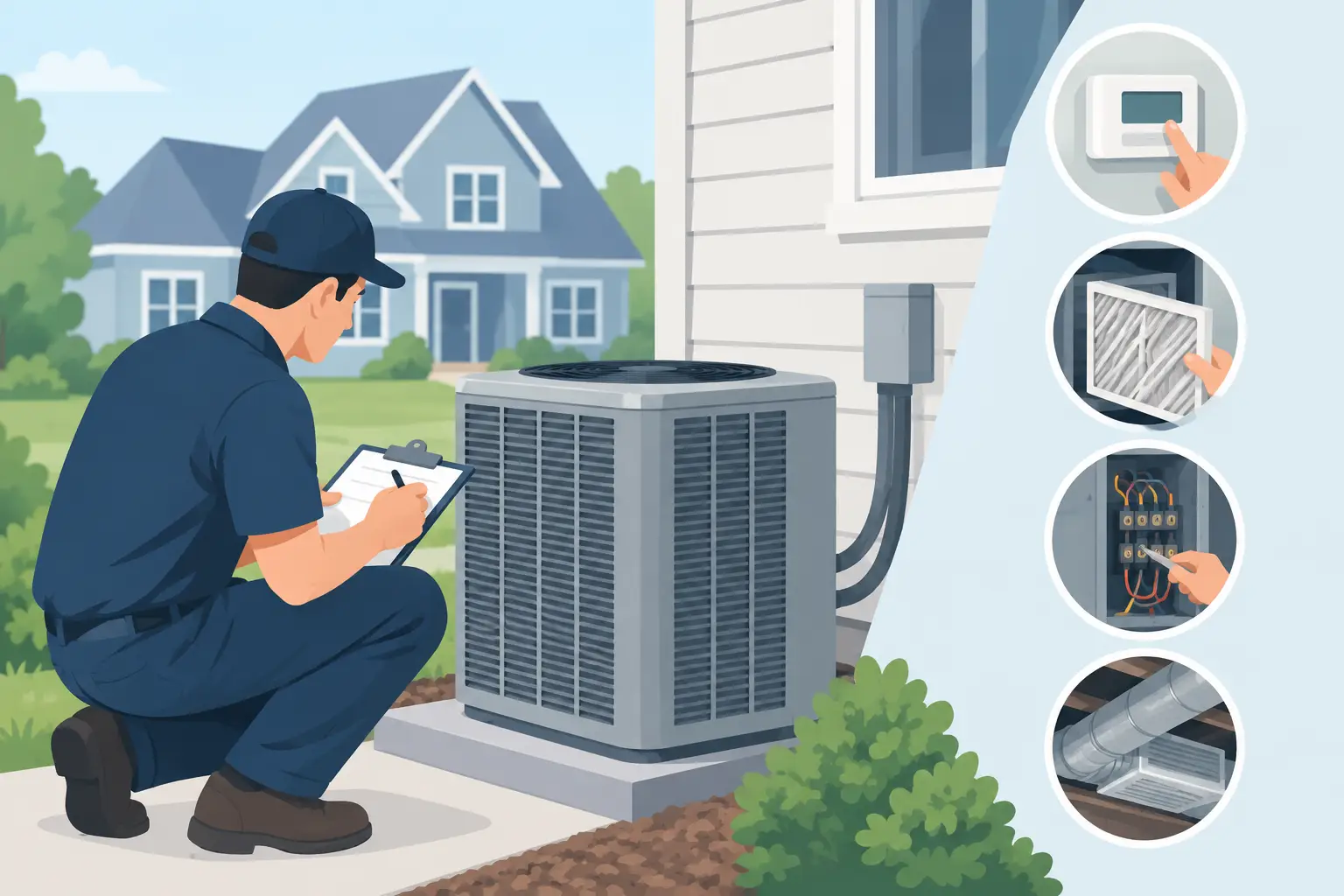

A furnace that starts during a showing and an air conditioner that blows cool air for five minutes can make a home feel move-in ready. Neither observation tells you whether the equipment is safe, correctly installed, near the end of its service life, or hiding a repair that could cost thousands after closing. An HVAC inspection before buying a house gives you a clearer picture of the systems responsible for comfort, indoor air quality, and, in a New Brunswick winter, basic livability.
For buyers in Saint John, the Kennebecasis Valley, Fredericton, and nearby communities, heating and cooling equipment deserves more than a quick glance at the thermostat. A thorough home inspection evaluates visible, accessible HVAC components in the context of the whole house, then explains what the findings may mean for your budget, safety, and purchase decision.
Why HVAC Deserves Close Attention Before Closing
HVAC equipment is expensive to replace, but the purchase risk is not limited to the unit itself. A furnace, boiler, heat pump, oil tank, duct system, venting arrangement, electrical disconnect, condensate drain, or thermostat can each affect performance and safety. Problems may also point to broader issues such as moisture in a mechanical room, inadequate insulation, poor attic ventilation, or an undersized electrical service.
Age matters, but it is not the whole story. A well-maintained older system may have useful life remaining, while a newer unit can have poor installation, neglected filters, damaged ducts, or recurring repair needs. The goal is not to demand that every used home have brand-new equipment. It is to identify material concerns before they become your responsibility.
That information can help you decide whether to proceed, ask the seller to address a safety issue, request documentation, adjust your offer, or set aside realistic funds for replacement. It also protects you from treating a clean mechanical room or a recent service sticker as proof that everything is operating properly.
What an HVAC Inspection Before Buying a House Can Reveal
A home inspection is a visual, non-invasive assessment of accessible components. It is not a substitute for a full HVAC contractor evaluation, system cleaning, combustion analysis, or engineering review. Still, an experienced inspector can identify many conditions that warrant attention and recommend further assessment when appropriate.
Heating equipment and fuel safety
The inspection should identify the type of heating system and observe its visible condition and operation when conditions allow. This may include a furnace, boiler, heat pump, electric baseboard heat, ductless mini-splits, or another installed source of heat. The inspector looks for concerns such as rust, damaged panels, improper clearances, loose or deteriorated vent connections, missing safety components, and signs of leakage.
For fuel-burning equipment, proper venting is especially important. Improperly routed, disconnected, corroded, or visibly compromised flues can create a potential carbon monoxide hazard. A home inspector cannot see inside every concealed section of a vent or certify combustion performance, but visible warning signs should not be ignored. Functional carbon monoxide alarms are a sensible safety measure in any home with fuel-burning appliances or an attached garage.
Oil-fired heating systems require careful attention as well. Visible tank condition, support, piping, shutoff components, and evidence of leakage can have major financial implications. If a tank appears aged, damaged, or questionable, a buyer may need further evaluation by a qualified specialist and, depending on the circumstances, documentation related to the tank and surrounding area.
Cooling, heat pumps, and seasonal limits
Air conditioning and heat pump operation may be limited by outdoor temperatures or manufacturer guidance. Running cooling equipment when it is too cold outside can damage the system, so a responsible inspection does not force a test simply to check a box. That is a trade-off buyers should understand, especially during a fall, winter, or early spring purchase.
When operation is appropriate, the inspection can observe whether the system starts, produces a reasonable temperature difference, drains condensate, and shows obvious defects at accessible components. The outdoor unit, refrigerant line insulation, disconnect, visible wiring, coil condition, and mounting are all relevant. Excessive noise, vibration, ice, oil staining, damaged fins, or a unit that cycles abnormally may justify a licensed HVAC technician’s review.
A heat pump can be an efficient choice, but its value depends on the model, installation quality, backup heat source, insulation levels, and how the home is used. Do not assume a heat pump will perform the same way in every house or that an advertised efficiency rating guarantees low utility costs.
Ductwork, airflow, and comfort issues
Ductwork is easy to overlook because much of it is hidden in basements, crawl spaces, attics, and chases. Where accessible, an inspector may identify disconnected ducts, crushed flexible ducting, inadequate support, missing insulation, heavy debris, or obvious air leakage. These issues can reduce comfort and efficiency even when the furnace or heat pump itself is in working order.
Uneven temperatures from room to room can have several causes. The problem may be duct design, a blocked register, insufficient return air, poor insulation, air leakage around windows, or an incorrectly sized system. A home inspection can flag the visible clues, but diagnosing the exact cause may require HVAC testing or an energy assessment.
Electrical and drainage details
HVAC equipment relies on safe electrical connections and reliable water management. The inspector will observe accessible disconnects, service switches, visible wiring, circuit protection, and signs of overheating or improper installation. Electrical trade experience is particularly valuable when evaluating the visible electrical components that support major mechanical equipment.
Condensate drains also deserve attention. A blocked or poorly routed drain can lead to water damage, mold-like growth, or a system shutdown. In high-efficiency furnaces and air-conditioning systems, look for secure piping, appropriate drainage, and no obvious evidence of past overflow around the unit.
How Thermal Imaging Adds Useful Context
Thermal imaging is not an X-ray, and it cannot measure refrigerant levels or confirm that every hidden duct is intact. What it can do is help reveal temperature patterns that deserve a closer look. During an inspection, infrared imaging may identify unusually cool or warm areas near supply registers, possible air leakage around ductwork, moisture patterns associated with condensate concerns, or insulation gaps affecting comfort.
At Infrared Home Inspections, complimentary thermal imaging is included with every inspection because visible conditions alone do not always tell the full story. A thermal image must be interpreted alongside the home’s construction, weather conditions, system operation, and moisture indicators. Used correctly, it supports a more complete assessment rather than replacing hands-on inspection or specialist testing.
Questions Buyers Should Ask About the HVAC System
Before removing inspection conditions or finalizing your purchase, ask for available records. Service invoices, installation permits, warranties, maintenance agreements, and equipment manuals can help establish the system’s history. They may also show whether a repair was a one-time issue or part of a recurring problem.
Ask when the equipment was installed, when it was last professionally serviced, and whether there have been leaks, failures, frozen pipes, comfort complaints, or insurance claims involving the mechanical systems. Sellers may not have every answer, particularly in an estate sale or rental property, but missing documentation is still useful information when planning your due diligence.
If the home inspection identifies a significant concern, ask a qualified HVAC contractor for a written evaluation and estimate. Be specific about what you need answered: Is there an immediate safety issue? Can the system be repaired? What is the expected remaining life? Is replacement recommended, and what related work might be needed? A replacement quote that excludes duct modifications, electrical upgrades, oil tank work, or venting changes may not reflect the complete cost.
Know What Requires Specialist Follow-Up
Some findings should prompt action before closing, not a wait-and-see approach. These include suspected gas or oil leaks, improper combustion venting, active water leakage, unsafe electrical conditions, a system that will not operate, evidence of overheating, or equipment at or beyond typical service life with no maintenance history.
Other findings may be manageable planning items. A unit nearing the later stage of its expected life, minor duct insulation deficiencies, a dirty filter, or an aging thermostat does not automatically make a home a bad purchase. The right response depends on the property’s price, the condition of other major systems, your renovation plans, and the reserve funds you will have after closing.
A careful inspection report separates observed defects from routine maintenance and explains when a licensed specialist should take the next step. Same-day reporting and a post-inspection review are especially helpful when you are working within a tight real estate condition period and need to understand the practical priority of each finding.
Make the Decision With Your Eyes Open
No inspector can promise that a mechanical system will never fail after you buy a home. Equipment can break unexpectedly, and concealed defects exist in every type of property. What a diligent HVAC review does provide is a more defensible decision: you know what was visible, what was operating at the time of inspection, what needs further evaluation, and where future costs may be waiting.
Before you commit to a house, make room in the conversation for the systems that keep it safe and comfortable. A few informed questions before closing can prevent a difficult surprise when the temperature drops and the home is finally yours.