
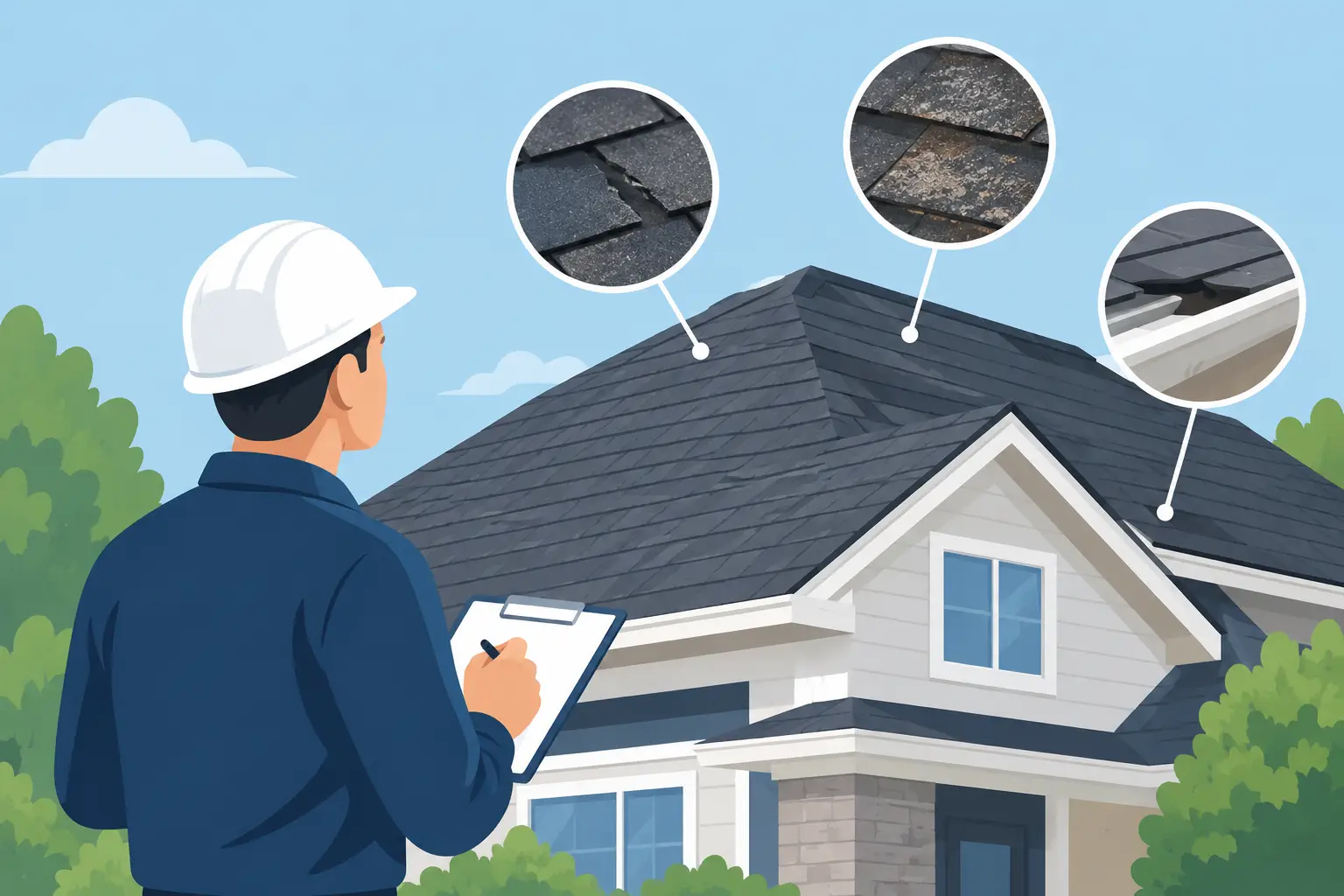

A roof can look acceptable from the driveway and still carry a costly problem. A thorough roof defects home inspection helps buyers look beyond curb appeal and understand whether the home’s first line of defense is nearing the end of its service life, leaking, or showing signs of improper installation. Before you remove conditions or finalize a purchase, roof findings deserve careful attention.
For buyers in Saint John, the Kennebecasis Valley, Fredericton, and surrounding New Brunswick communities, roof condition is not a small maintenance detail. Snow loads, freeze-thaw cycles, wind, ice dams, and driving rain can expose weaknesses quickly. The right inspection provides clear information you can use to ask questions, plan repairs, or negotiate with confidence.
Why Roof Defects Matter Before Closing
A roof protects the structure, attic insulation, electrical components, finishes, and personal property below it. When water gets past the roofing system, the visible stain on a ceiling may be only one part of the story. Moisture can damage roof sheathing, saturate insulation, contribute to mold-like conditions, and affect framing over time.
The financial impact also varies widely. Replacing a few damaged shingles may be manageable. Correcting active leakage, deteriorated sheathing, inadequate ventilation, flashing failures, or a roof at the end of its life can become a much larger project. A home inspection is not a roofing warranty or a prediction of exactly when a roof will fail, but it gives you an informed assessment of visible conditions at the time of inspection.
That distinction matters in a competitive real estate transaction. Buyers should not assume that a roof is sound simply because it is not actively leaking during a showing. Dry weather can hide defects, and a finished ceiling can conceal prior or intermittent moisture intrusion.
What a Roof Defects Home Inspection Looks For
A qualified home inspector evaluates accessible roof surfaces and related components from safe observation points. Depending on roof pitch, height, weather, material condition, and site safety, that may include viewing the roof from the ground, ladder, roof edge, or other appropriate locations. Walking every roof is not always safe or necessary, and a professional inspector should never create damage or take unnecessary risks to access an area.
The inspection should consider the roof as a system, not merely count missing shingles. That includes the roof covering, flashings, penetrations, gutters and downspouts where present, visible drainage patterns, attic conditions, insulation, ventilation, and evidence of moisture intrusion.
Roof Covering and Surface Wear
Asphalt shingles remain common in New Brunswick, but their condition can vary significantly even on roofs of similar age. An inspector may identify curling, cracking, blistering, granule loss, exposed fasteners, lifted tabs, damaged ridge caps, or areas with missing material. These conditions can indicate normal aging, wind damage, installation concerns, or a need for further roofing evaluation.
Metal, cedar, membrane, and other roof materials have their own failure patterns. Loose panels, corrosion, failed seams, deteriorated sealants, split wood shakes, or worn membrane surfaces can all affect performance. Age alone does not determine a roof’s condition. Installation quality, ventilation, weather exposure, maintenance, and prior repairs matter too.
Flashing, Valleys, and Roof Penetrations
Many roof leaks begin where materials meet rather than in the center of a shingle field. Flashing around chimneys, skylights, plumbing vents, wall intersections, and roof valleys must direct water away from vulnerable openings. Rusted, loose, poorly integrated, or improperly sealed flashing can allow water into the roof assembly.
A patch of roofing cement may stop a small leak temporarily, but it can also signal a recurring concern or a repair that deserves closer review. The inspector documents visible evidence without assuming every repair is defective. When conditions are unclear or damage appears significant, a licensed roofing contractor may be the appropriate next step before closing.
Drainage and Ice-Dam Risk
Water needs a clear path off the roof and away from the foundation. Clogged or damaged gutters, loose downspouts, improper slopes, and discharge too close to the house can contribute to moisture problems. In winter, uneven roof temperatures can also contribute to ice dams, where melting snow refreezes near colder roof edges and forces water beneath roofing materials.
Attic insulation and ventilation can influence this risk. More insulation is not automatically better if it blocks soffit ventilation or is installed unevenly. The goal is a roof assembly that manages heat, moisture, and airflow appropriately for the home’s design.
The Attic Often Tells the Real Story
The exterior roof surface is only half the picture. An accessible attic can reveal conditions not visible from outside, including water staining, active moisture, deteriorated sheathing, fungal-like growth, daylight at penetrations, inadequate ventilation, or compressed and displaced insulation.
Not every dark mark is an active leak, and not every attic odor indicates mold. A careful inspector distinguishes between observed conditions and conclusions that require specialized testing. Still, stains, damp materials, or visible sheathing deterioration should not be dismissed because the roof looks acceptable from ground level.
Infrared thermal imaging can add another layer of information during a home inspection. At Infrared Home Inspections, thermal imaging is included to help identify temperature differences that may point to moisture concerns, insulation gaps, or air leakage patterns. Thermal imaging does not see through roofing materials, and it does not confirm moisture by itself. It is a valuable screening tool that helps direct closer investigation when conditions allow.
Common Roof Findings Buyers Should Take Seriously
Some roof findings call for routine planning. Others may justify a fast response or additional evaluation before you move forward. Pay attention when an inspection identifies active leakage, widespread shingle damage, soft or deteriorated roof decking, significant flashing concerns, improper drainage, or evidence that a roof replacement may be approaching.
Buyers should also take note of recent repairs. A repair is not automatically a red flag. Responsible maintenance is often a positive sign. The key questions are whether the repair appears complete, whether there is continuing moisture evidence, and whether the seller can provide useful details such as the contractor, scope, permit history where applicable, or remaining warranty information.
If a report recommends further evaluation, treat that recommendation as useful protection rather than a vague warning. A roofing professional can assess repair scope, material compatibility, remaining service life, and replacement pricing in more detail than a general home inspection is designed to provide.
How to Use Roof Findings in Your Purchase Decision
A home inspection report gives you facts. Your purchase decision depends on the facts, your budget, the local market, and the property’s overall condition. A roof near the end of its expected service life may be acceptable if the purchase price, timing, and budget account for replacement. An active leak with suspected structural or interior damage is a different level of concern.
Before requesting repairs or credits, ask for clarity. What was observed? Is it active, historical, or uncertain? What parts of the roof system are affected? Is a specialist review recommended before the inspection contingency expires? These questions keep discussions focused on documented conditions rather than assumptions.
Avoid relying only on a seller’s statement that the roof has never leaked. Sellers may be acting in good faith and still be unaware of an intermittent issue, especially if it occurs only during wind-driven rain, rapid snowmelt, or ice-dam conditions. Inspection findings, attic evidence, and contractor evaluation provide a stronger basis for decision-making.
What a Home Inspection Cannot Tell You
No visual inspection can guarantee that a roof will not leak in the future. Inspectors cannot see concealed layers beneath intact roofing materials, predict storm damage, or confirm every condition in inaccessible areas. Snow cover, wet surfaces, steep slopes, and limited attic access can also restrict what can be observed safely.
A clear report should explain those limitations and document the conditions observed. That transparency protects buyers. It helps you understand what was inspected, what could not be fully evaluated, and whether another professional should be consulted.
Protect the Home Before It Becomes Yours
Roof concerns are easier to address when you have time to gather estimates, ask for documentation, and make decisions before closing. A careful inspection does not make a home risk-free, but it replaces uncertainty with practical information. When a roof finding appears in your report, give it the attention it deserves – it may be one of the most useful opportunities you have to protect your investment before the keys are in your hand.