
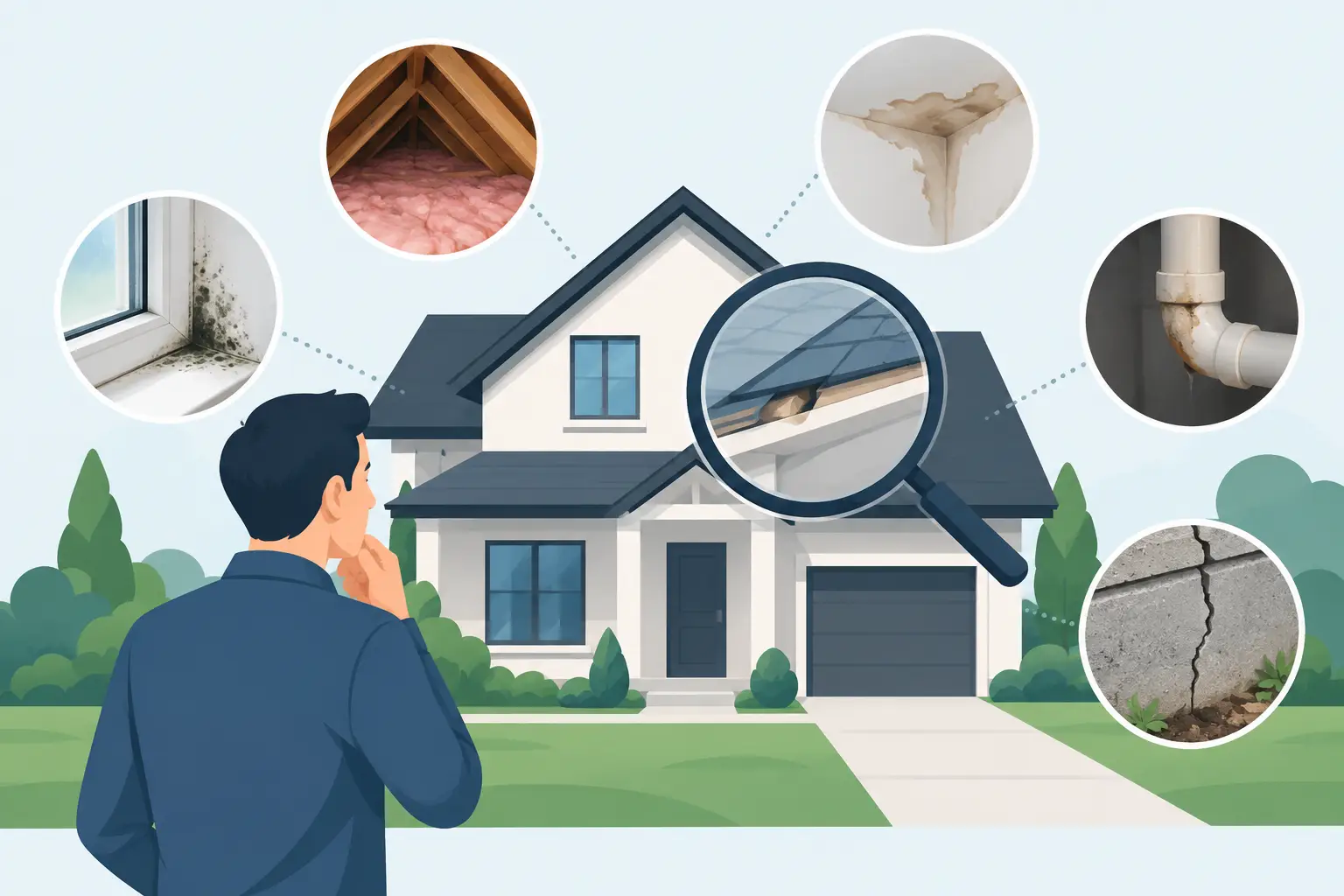

A freshly painted basement wall, a staged living room, and a clean seller disclosure can make a home feel move-in ready. But some of the top hidden house defects do not show themselves during a quick walkthrough. They sit behind finished walls, under insulation, inside electrical panels, and beneath floors – where they can affect safety, financing, insurance, and the true cost of ownership.
For buyers in Saint John, the Kennebecasis Valley, Fredericton, and surrounding New Brunswick communities, a thorough inspection is a practical way to slow down and see the property clearly. Not every issue is a deal-breaker. The value is knowing what you are buying, what may need attention soon, and where you may have room to negotiate before closing.
Why hidden defects matter before you buy
A visible cosmetic issue is easy to account for. A worn countertop or dated light fixture is usually a matter of preference and budget. Hidden defects are different because they can point to water intrusion, unsafe wiring, structural movement, poor ventilation, or failing systems that carry much larger repair costs.
Age alone does not determine whether a home is a good purchase. An older home that has been carefully maintained may be a better investment than a newer one with rushed renovations or deferred maintenance. The inspection process helps separate normal aging from conditions that require repair, further evaluation, or a revised purchase decision.
10 top hidden house defects to watch for
1. Moisture behind finished basement walls
Finished basements can hide foundation seepage, plumbing leaks, and condensation. Staining may be covered by new drywall or paint, while musty odors may be subtle or absent during a short showing. Moisture can damage framing, insulation, flooring, and stored belongings, and persistent conditions can support mold growth.
A visual inspection may identify clues such as efflorescence, damaged trim, or uneven flooring. Thermal imaging can also help identify temperature patterns consistent with moisture or missing insulation, although it does not see through walls or confirm every moisture source. When conditions warrant it, a moisture meter or specialist evaluation may be recommended.
2. Roof leaks that have not reached the ceiling
A roof can look acceptable from the ground while leaks are developing around flashing, vents, valleys, chimneys, or skylights. Water may travel along roof framing before it becomes visible inside, so the ceiling stain is often not directly below the entry point.
Attic access is especially valuable. Inspecting the underside of the roof sheathing, insulation, ventilation, and framing can reveal water staining, active dampness, mold-like growth, or signs of past repairs. Roof age and remaining service life also matter, particularly if you are budgeting for ownership after closing.
3. Electrical hazards hidden behind a neat panel cover
Electrical concerns are not always obvious from functioning lights and outlets. An older or altered electrical system may contain improper wiring methods, double-tapped breakers, overheated connections, missing grounding, inadequate panel capacity, or unsafe amateur work.
These issues deserve careful attention because electrical defects can create shock and fire hazards. An inspector can identify visible deficiencies and explain their likely significance, but concealed wiring cannot be fully assessed without invasive work. If the panel or visible wiring raises concerns, a qualified electrician should provide the next level of evaluation and repair pricing.
4. Plumbing leaks below sinks, tubs, and floors
Small plumbing leaks can quietly cause major damage. A slow drain leak beneath a tub, a failing toilet seal, or a pinhole leak in a supply line may saturate subflooring long before water appears in the room below.
Inspectors look for moisture damage, corrosion, loose fixtures, slow drainage, improper drain configurations, and signs of leakage at accessible plumbing components. Water pressure, fixture operation, and visible pipe materials also provide useful context. A home can have working plumbing today and still need attention if aging supply lines or drainage components are near the end of their service life.
5. Inadequate attic insulation and ventilation
An attic is one of the most revealing spaces in a house. Insufficient insulation can contribute to high heating costs, cold rooms, and ice damming. Poor ventilation can trap warm, moist air, which may lead to condensation on roof sheathing and reduced roof life.
This is particularly relevant in climates with cold winters. The solution is not always simply adding more insulation. Air sealing, ventilation pathways, bath fan termination, and attic access details all need to work together. A proper assessment identifies the likely cause before money is spent on the wrong repair.
6. Foundation movement and concealed structural changes
Hairline cracks in concrete are common and do not automatically indicate a serious structural problem. Wider cracks, horizontal cracking, bowing walls, displaced masonry, sloping floors, or doors that no longer close properly may deserve more scrutiny.
Buyers should also be alert to unpermitted or poorly supported alterations. A removed wall, altered beam, or improvised post can affect how loads move through the house. An inspection can identify visible signs of concern, but structural engineering advice may be necessary when movement or inadequate support is suspected.
7. Improper grading and drainage around the home
Water should move away from the foundation, not toward it. Short downspouts, negative grading, blocked gutters, and hard surfaces sloping toward the home can direct significant water against basement walls and crawl spaces.
Drainage defects are often manageable, especially when caught early. Still, they should not be dismissed as a minor exterior detail. Correcting water management can help prevent moisture damage, foundation deterioration, and recurring basement leakage.
8. Hidden crawl space moisture and wood deterioration
Crawl spaces are easy to overlook because they are inconvenient to access. That makes them a common location for high moisture, poor vapor control, insect activity, insulation damage, plumbing leaks, and deteriorated floor framing.
A damp crawl space can affect indoor air quality and contribute to uneven floors above. The cause may be exterior drainage, exposed soil, plumbing leakage, inadequate ventilation, or a combination of factors. The right repair depends on the actual source, not a one-size-fits-all fix.
9. Bathroom and kitchen exhaust problems
Bathrooms and kitchens produce moisture every day. When exhaust fans vent into an attic, crawl space, or wall cavity rather than outdoors, that moisture can accumulate where it does not belong. A fan that runs but moves little air can be nearly as ineffective as no fan at all.
Inspectors evaluate accessible duct routing, exterior terminations, fan operation, and moisture-related clues. This is a good example of a defect that may seem small but can create expensive attic or wall damage over time.
10. Unsafe decks, railings, and exterior connections
A deck may look solid from above while its ledger connection, posts, footings, fasteners, or framing show deterioration. Loose railings, improper stair geometry, and decayed wood can create immediate safety concerns for families and guests.
Exterior defects are often exposed to weather year-round, so maintenance matters. Pay attention to where wood meets soil, concrete, or siding, as these areas are more vulnerable to moisture-related decay. Repairs can range from straightforward maintenance to significant reconstruction, depending on the condition and original installation.
What thermal imaging adds to a home inspection
Thermal imaging is a useful tool because it identifies surface temperature differences that the eye cannot see. In the right conditions, it can help direct attention to possible moisture intrusion, missing insulation, air leakage, overheating electrical components, or plumbing concerns.
It is not X-ray vision, and a thermal image does not diagnose a defect by itself. Outdoor temperature, recent weather, HVAC operation, and the materials inside the wall can affect results. Used alongside a detailed visual inspection, moisture measurements, and trade-level experience, it provides another layer of evidence rather than a shortcut to conclusions.
Infrared Home Inspections includes thermal imaging with every inspection to support a more complete assessment of accessible conditions. The goal is straightforward: give buyers clear findings they can discuss with their agent, seller, or qualified repair professional before their conditions are removed.
How to use inspection findings wisely
Do not focus only on the number of items in an inspection report. Nearly every home, including a well-maintained one, will have findings. Focus on safety concerns, active moisture, structural indicators, major system conditions, and repairs that could become more expensive if delayed.
Ask questions about urgency, likely next steps, and whether a specialist should evaluate the condition before closing. A same-day report is most useful when you review it carefully, understand the language behind each finding, and use that information to make an educated decision. The right home is not necessarily defect-free. It is a home whose condition, repair needs, and price make sense for your plans and budget.